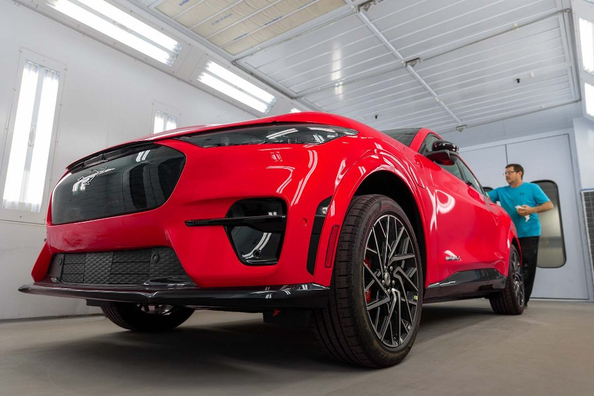
High-quality car painting preserves the vehicle’s appearance and protects the body from corrosion. Unprofessional work can lead to defects that appear over time. This article explains how to check the quality of the paintwork to ensure its durability. To enhance your car and emphasize its look, you can choose from a wide range of tuning accessories available in our online store.
Why is quality painting important?
Good painting:
- Protects the metal from rust.
- Maintains the car’s aesthetics.
- Increases its market value.
Signs of quality painting
Evaluate the work using these criteria:
- Color uniformity: The surface should be even, without spots or transitions.
- No defects: Check for runs, bubbles, or orange peel effect.
- Smoothness: The surface should be flat and free of roughness.
- Joints and edges: Paint on seams and edges should be neat, without drips.
Inspection methods
- Visual inspection: Examine the body in bright daylight from different angles.
- Using a thickness gauge: The device shows the thickness of the paint layer (standard: 80–150 microns for factory painting).
- Adhesion test: Gently run your fingernail over the surface — the paint should not peel off.
- Moisture test: After washing, there should be no bubbles or peeling.
Evaluation tips
- Compare the paint with factory areas (for example, under the hood).
- Check in dry weather to avoid distortion caused by moisture.
- Consult a specialist if you doubt the quality.
What to do if defects are found?
- Contact a service center to fix minor flaws.
- Request a redo if the work was done poorly.
High-quality painting requires careful inspection to avoid future problems.