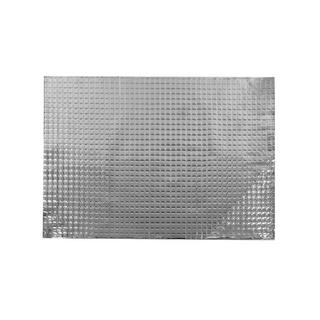
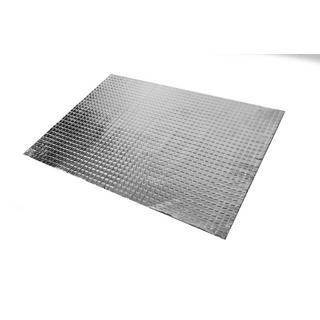
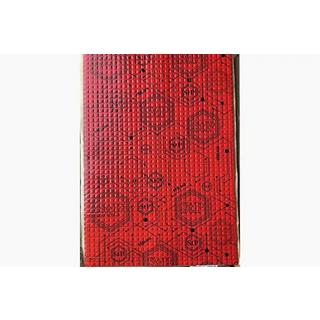
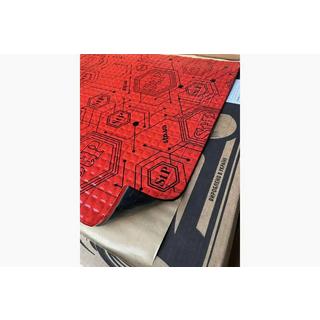
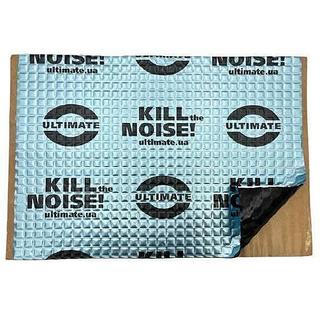
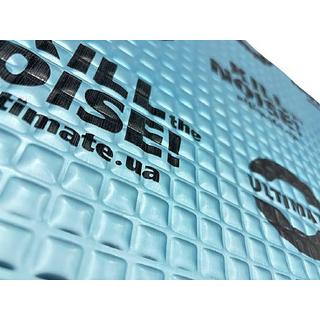
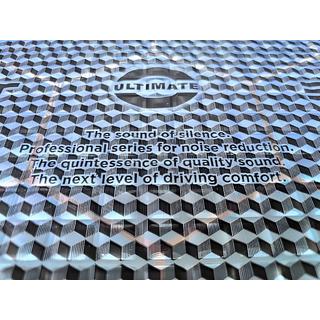
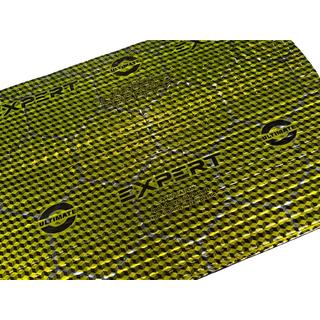
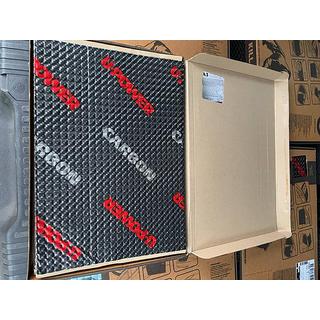
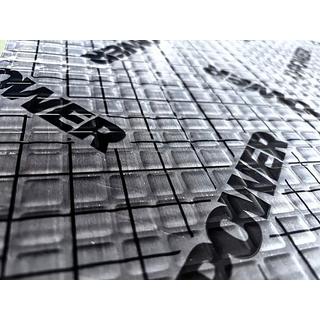
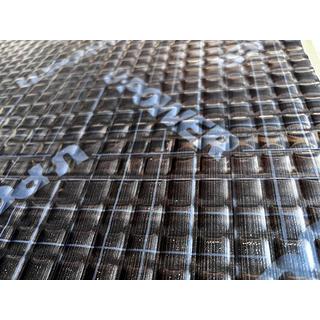
Car vibration damping is self-adhesive sheets with an aluminum foil layer that are applied directly to the car body metal to eliminate ringing and resonance in doors, the floor, wheel arches, and the trunk. This page includes Ultimate sheets (Expert, U-Power, Construct, RESOLUT, STP lines) from 2.1 to 4 mm thick, Base with foil by Practik in several thicknesses, and Guard Defender 1.8 mm protection material for arches and the underbody.
Which vibration damping sheet should you choose?
| Sheet | Thickness | Size | Effective on metal | Typical application areas |
|---|
| Ultimate U-Power Easy | 2.1 mm | 50×35 cm | up to 1.0 mm | smooth surfaces; second reinforcing layer on the underbody, arches, and firewall |
| Ultimate Expert Cold Gold | 2.1 mm | 50×35 cm | up to 1.5 mm | roof, fenders, doors, trunk, plastic parts |
| RESOLUT R2 | 2.3 mm | 75×50 cm | — | doors, side panels, trunk walls |
| Ultimate U-Power Uni | 2.6 mm | 50×35 cm | up to 3.0 mm | universal: floor, arches, firewall, trunk |
| Ultimate Expert Blue Silver | 3.0 mm | 50×35 cm | up to 3 mm | doors, fenders, floor, luggage compartment |
| Ultimate U-Power Carbon | 3.0 mm | 50×35 cm | up to 3.5 mm | high-load metal surfaces, carbon-fiber reinforced |
| Ultimate Expert Red Gold, Ultimate Construct | 4.0 mm | 50×35 cm | up to 3.5 mm | floor, arches, firewall, luggage compartment |
| RESOLUT R4 | 4 mm | 75×50 cm | — | cabin and trunk floor, wheel arches |
| Base with foil (Practik) | 1.3 / 2.0 / 3.0 / 4.0 mm | 75×47 cm | — | from plastic parts and roof (1.3 mm) to the floor and spare-wheel well (4 mm) |
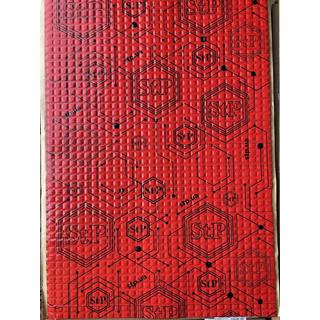
The page also features an STP sheet 75×50 cm. The rule is simple: the thicker and heavier the sheet, the better it damps vibration on thicker metal—but the more space it takes under trim. For doors (especially for speaker installs), people most often choose around 2 mm; for the floor and wheel arches, 3–4 mm.
How is vibration damping different from sound insulation?
They are different layers with different jobs. Vibration damping is a dense foil-backed sheet applied first, directly to the metal, to stop panel vibration. Sound insulation is a soft porous material applied as the second layer on top to absorb airborne noise. That’s why, for a quieter cabin, you typically need both: vibration damping here, and the second layer in the sound insulation and thermal insulation subcategories.
What is Guard Defender for?
Guard Defender 1.8 mm (50×37.5 cm) is not a vibration damper—it’s an elastic protective layer against corrosion and stone impacts. It’s applied on the outside of wheel arches and on the underbody, including over a vibration damping sheet, to protect the aluminum foil.
How many sheets do you need?
Measure the area you plan to cover and divide it by the area of one sheet: 50×35 cm is 0.175 m², 75×50 cm is 0.375 m², and 75×47 cm is about 0.35 m². Add a small allowance for trimming. For installation you’ll need a roller—available in the rolling rollers subcategory—and to eliminate trim squeaks, use anti-squeak materials. All materials are collected in the car sound & vibration insulation section.
This description was prepared with the help of AI based on analysis of over 1 million phone calls between DD Tuning managers and customers, as well as the company knowledge base. We collected the most common questions customers ask and provided answers verified in real-world use.