16.08.2026
160
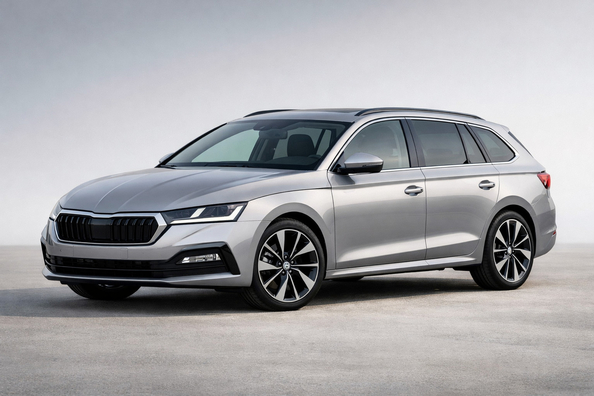

The Skoda Octavia Combi IV generation after the 2024 facelift has remained the same large and very practical estate it’s valued for: plenty of space, a huge trunk, a wide engine range, and highway manners that often convince more strongly than fashionable crossovers. This is a model for those who need one car for family, work, and long trips—not just a higher seating position.
The 2024 update didn’t overturn the concept, it refined it: a fresher front end, different lighting, updated infotainment, and revised equipment. The key when choosing an Octavia Combi isn’t the facelift itself, but the exact version: engine, gearbox, rear suspension type, wheel size, and option set genuinely change the car’s character.
The Octavia Combi plays in a segment where buyers compare not only estates but also crossovers at a similar price. Its strength is that it offers more usable space and better road composure than many raised alternatives, without the extra weight and fuel costs.
This model suits those who often drive on highways, carry family, suitcases, kids’ items, or work gear. It makes less sense for those who want the highest possible seating position, frequently head onto broken roads, or hardly use an estate’s cargo potential.
The Octavia lineup has four main generations, and the Combi body has been one of the model’s strongest arguments for years. For the accessories market and parts selection it’s important not to mix up generations: Octavia III and Octavia IV can look close on the outside, but technically they are different cars.
| Generation | Years | What matters to know |
|---|---|---|
| Generation I | 1996-2004, some Tour versions were sold longer | this is the car that made Octavia a mass-market model for the brand |
| Generation II | 2004-2013 | noticeably more maturity in chassis tuning and practicality |
| Generation III | 2012-2020 | a very strong position as a family and fleet estate |
| Generation IV | debut 2019, sales from 2020, facelift 2024 | the current A8 or NX generation covered in this review |
The 2024 facelift does not mean a new generation. It’s an updated Octavia IV: the platform stayed the same, but styling details, lighting, trim logic, and the digital cabin side changed.
After the 2024 update, the engine lineup depends on the sales country, but the basics are clear: 1.5 TSI petrol engines, 2.0 TDI diesels, and more powerful 2.0 TSI options for those who want dynamics. This is where you shouldn’t generalize: one Octavia Combi can be a calm, economical family estate, while another is a very fast version with a completely different mood.
| Engine | Displacement | Power | Gearbox | Drive | Practical note |
|---|---|---|---|---|---|
| 1.5 TSI | 1498 cm³ | 115 hp | 7-speed DSG, other combinations may be available in some markets | front | base petrol option for calm daily driving |
| 1.5 TSI | 1498 cm³ | 150 hp | 7-speed DSG, mild hybrid depending on version | front | a good petrol balance for city, highway, and family trips |
| 2.0 TDI | 1968 cm³ | 115 hp | 6-speed manual or 7-speed DSG, depending on market | front | for those who drive a lot and aren’t chasing maximum dynamics |
| 2.0 TDI | 1968 cm³ | 150 hp | 6-speed manual or 7-speed DSG | front | one of the most practical choices for highway use, mileage, and load |
| 2.0 TSI | 1984 cm³ | 204 hp | 7-speed DSG | all-wheel | a version for those who want extra pulling power and better traction |
| 2.0 TSI RS | 1984 cm³ | 265 hp | 7-speed DSG | front | sporty RS version—no longer purely utilitarian |
From an owner’s perspective, the simplest logic is this: 1.5 TSI 150 hp is for moderate annual mileage and a quieter petrol character; 2.0 TDI 150 hp is for frequent long trips and fully loaded driving. The base 115 hp engines are workable, but in a heavy estate with cargo there will be less reserve pulling power.
The Octavia Combi IV is already close to the upper limit of the class in size, and that’s exactly why it works so well as an everyday estate. There’s no extra crossover height, but you get a long wheelbase, useful cabin space, and a very strong trunk.
| Parameter | Value | What it means in practice |
|---|---|---|
| Length | about 4698 mm | in parking it’s no longer a compact, but on the highway it feels grown-up |
| Wheelbase | 2686 mm | good space reserve for the second row |
| Width | 1829 mm | comfortable front seating without feeling cramped |
| Height | about 1.47-1.49 m depending on version | a car-like seating position, not crossover-like, but convenient for daily entry |
| Ground clearance | about 140-145 mm, depending on version | enough for city and highway, but not much reserve for bad roads |
| Trunk volume | 640 l | one of the model’s main arguments |
| Maximum volume | up to 1700 l with the second row folded | the estate can genuinely work as a cargo helper |
The suspension is built on the MQB platform. Up front are MacPherson struts, and at the rear the design depends on engine and version: simpler front-wheel-drive trims may use a torsion beam, while more powerful and all-wheel-drive versions get a multi-link setup. That’s why two Octavia Combi cars with different engines can drive noticeably differently.
The main advantage of the cabin isn’t a novelty effect, but its volume and usability. There’s enough knee room in the back for adults, the trunk has the right shape, and the estate body makes it easier to transport a stroller, suitcases, boxes, gear, or work items.
After the facelift, the digital side looks better: fresh infotainment, more up-to-date screens, and a broader equipment list in richer versions. In terms of safety the model is traditionally strong, but it’s important to check the exact trim: the set of assistants, better headlights, cameras, and support systems can differ significantly. A practical downside is that some everyday functions are tied to the central screen, and not everyone likes that.
In the city the Octavia Combi isn’t small, so you need to get used to parking it, especially after a hatchback or compact crossover. But on the highway and in mixed driving it feels very natural: quiet, stable, and it doesn’t force you to sacrifice cargo space or second-row room.
For real life, the details matter. A diesel makes sense when the car actually drives and racks up mileage, rather than sitting on short city routes. Big wheels look better, but usually make the ride harsher and tire service more expensive. For daily comfort, 16-17-inch wheels are often a smarter choice than large low-profile options.
| Pros | What it gives you | Cons | What it means in practice |
|---|---|---|---|
| Very large trunk | the car truly covers family and work tasks | Not crossover ground clearance | on dirt roads and in winter you need to choose your line more carefully |
| Spacious second row | adults and kids are comfortable on long trips | Some functions are in the screen | not everyone likes this ergonomics in everyday use |
| Wide choice of engines | you can match the car to your mileage and driving style | The car’s character strongly depends on the version | you can’t judge all Octavia Combi models the same |
| Good highway manners | more comfortable for long distances than many similarly priced crossovers | Large wheels reduce everyday comfort | a harsher ride and more expensive tires with no real benefit for most owners |
In the end, the Octavia Combi’s strengths are best revealed where the car truly works as an estate: family, highway, travel, regular cargo. If your main request is a high seating position and more tolerance for broken roads, its advantages won’t look as convincing.
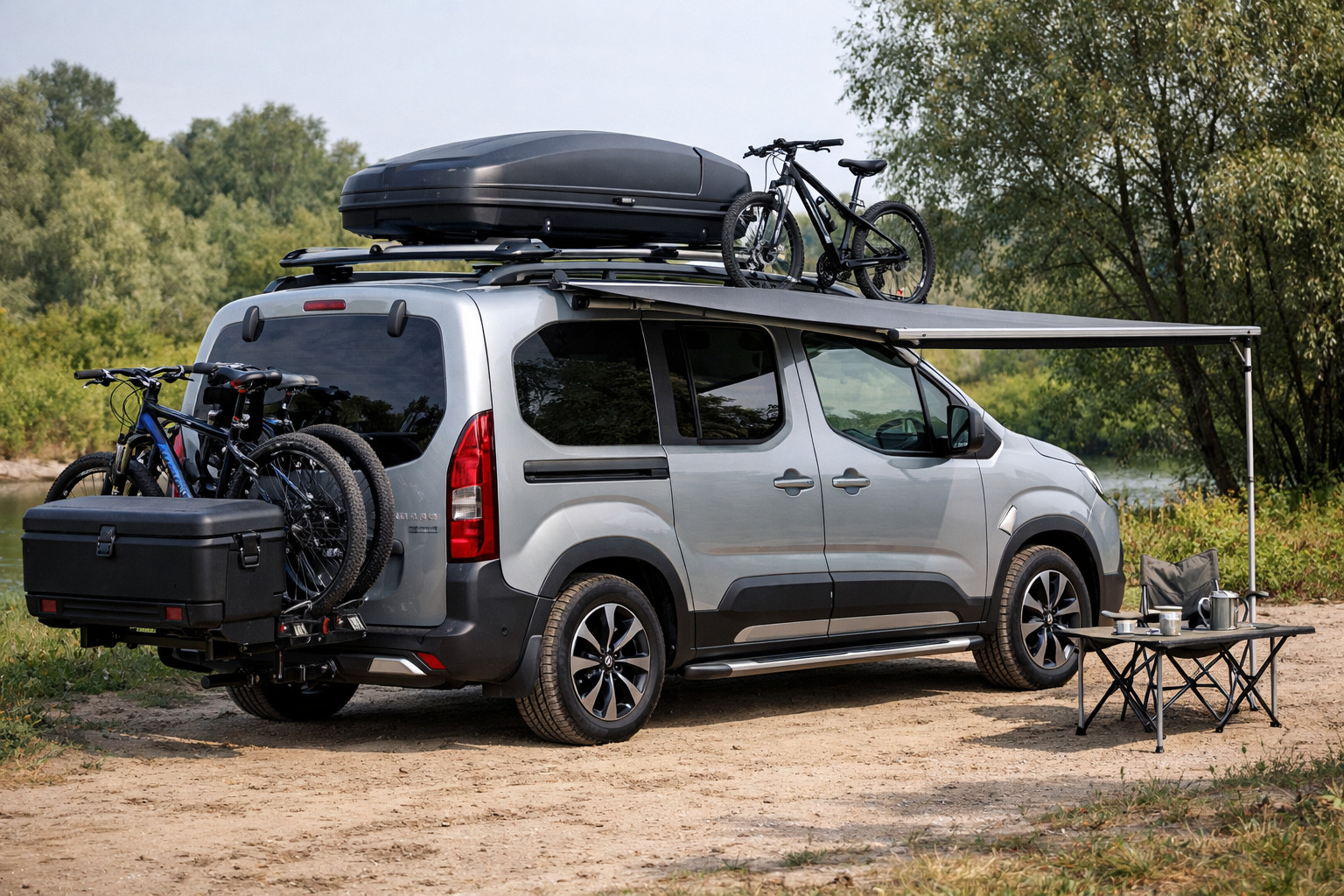
For the Octavia Combi, tuning makes the most sense when it solves everyday tasks. This body style often lives with suitcases, boxes, kids’ items, tools, or sports equipment, so protection for the cargo area, body, and roof usually turns out to be more useful than decorative body kits.
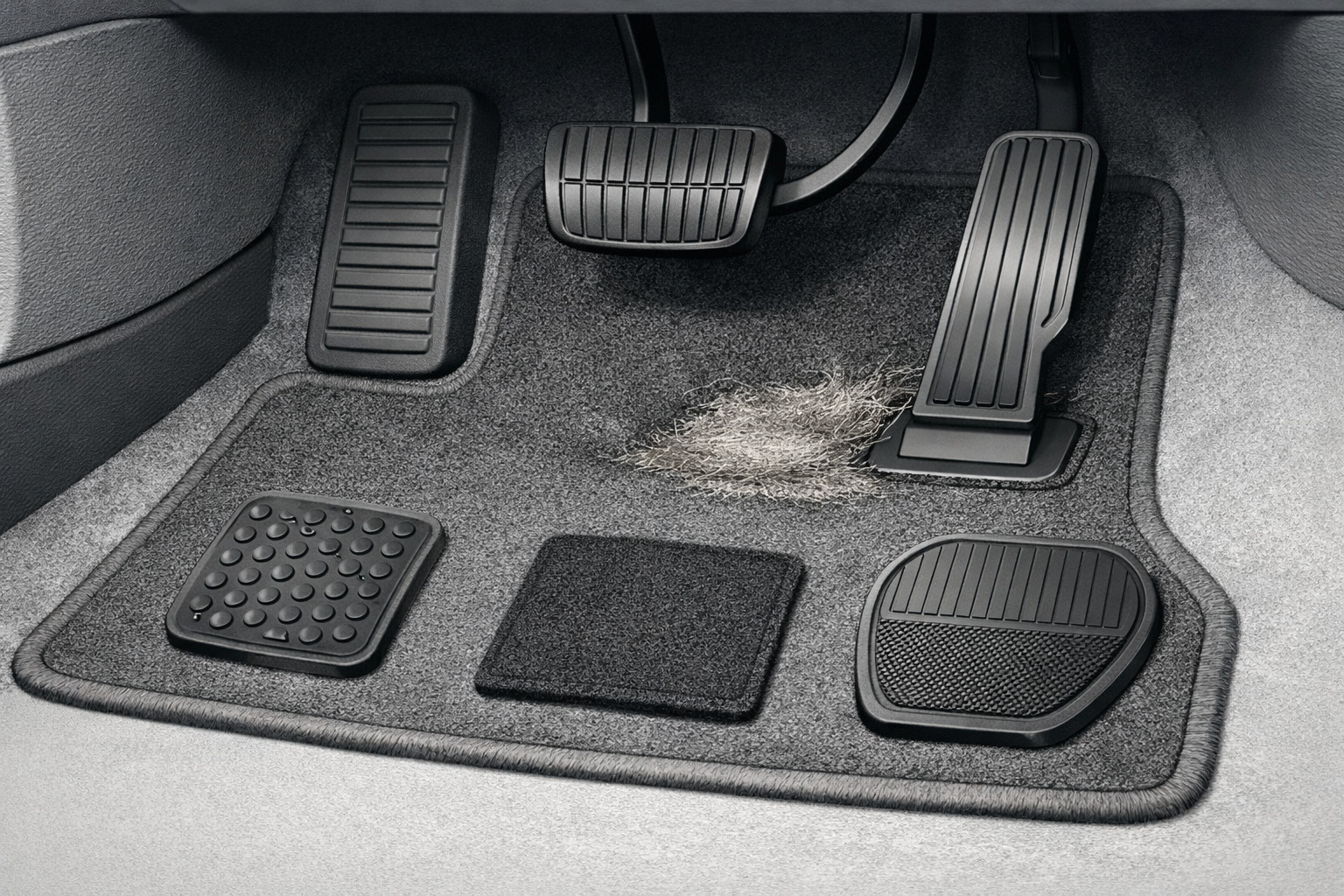
If the car is for family or work, it’s better to start not with flashy parts, but with what truly reduces wear and makes maintenance easier. For a regular Combi this is more logical than aggressive exterior styling, which is more appropriate for RS versions. In an accessory подборці for this generation, it’s worth starting with a trunk mat, and for protection under daily load a rear bumper protector will be useful.
If trips are planned or you need to carry long items, it also makes sense to look at a roof rack: it expands the estate’s capabilities without losing the main trunk space.
The Skoda Octavia Combi IV after the 2024 facelift is one of the strongest practical estates for those who need a big trunk, a proper second row, and calm, mature highway behavior. It’s best suited to families, people who travel often, and those who want one car for all tasks without moving into the crossover format.
The main rule here is simple: evaluate not only the model, but the exact configuration—engine, gearbox, suspension, wheels, and equipment. The material is based on real selection experience, practice, and real usage scenarios, so the unvarnished conclusion is this: the Octavia Combi is good when its version precisely matches your driving routine, not just because you like the name on the tailgate.
| ✔ | A very large 640 l trunk and up to 1700 l with the second row folded down. This makes the wagon convenient for family trips, work, and transporting bulky items. |
| ✔ | The roomy second row and long wheelbase provide ample space for adult passengers. On long journeys, this feels noticeably more comfortable than in many similarly priced crossovers. |
| ✔ | The wide engine lineup lets you choose a version for different needs: from relaxed daily driving to long-distance runs or a more dynamic character. The 1.5 TSI 150 hp and 2.0 TDI 150 hp look especially logical. |
| ✔ | On the highway, the car feels composed and natural. For those who often drive long distances, this can be a more practical choice than many crossovers. |
| ✔ | After the facelift, the multimedia system, screens, and some equipment were updated. This improves the sense of modernity without changing the model’s practical essence. |
| ✘ | A ground clearance of around 140–145 mm does not make the Octavia Combi a car for bad roads. On dirt roads and in winter, you need to choose your line more carefully. |
| ✘ | In the city, the wagon feels large, so you need to get used to parking. After a more compact car, this can be inconvenient every day. |
| ✘ | Some everyday functions are tied to the central screen. For those who do not like this kind of ergonomics, this will be a noticeable drawback. |
| ✘ | Large wheels reduce comfort and increase tire costs. For daily driving, the article directly recommends seeing the 16–17-inch options as more practical. |
Shipping to EU
Wholesale and retail
Own warehouse
Опис продукту
Подарунки не надаються при оформленні покупки у кредит під 0,01% або при покупці частинами.