4
Article: A093903
Out of production
⛔ Out of stock, on order 1-4 days
Bull bars (nudge bar, front guard, rear guard, hoop) – all these are names for the same structure made of steel tubes and rods. Such accessories are mounted at the front or rear of the vehicle and protect the body when driving off-road or in accidents. Most often, bull bars are used for tuning vans, SUVs, crossovers, and pickups, but sometimes they are also installed on regular passenger cars.
People often say that the front bar is one of the elements of a vehicle’s protective body kit. It is very popular among drivers both as front bumper protection and as an accessory that adds an aggressive look. You can choose which one to buy in our catalog. They are generally divided into three types:
Type of bar. Produced in various versions – with or without a grille, high or low, wide or narrow. Usually made of stainless steel. There is also a more affordable option made of black metal painted in different colors. In Ukraine, it is not prohibited, although for cars with European registration the inspection procedure is more complicated. Tube diameter: 51 mm, 60 mm, or 70 mm.

Front guard. Installed under the bumper to protect it. It also comes in many designs – single tube, double tube, or tube with a grille. Tube diameter options: 42 mm, 51 mm, 60 mm, or even 70 mm. We try to keep all variants in stock. Approved in Europe.
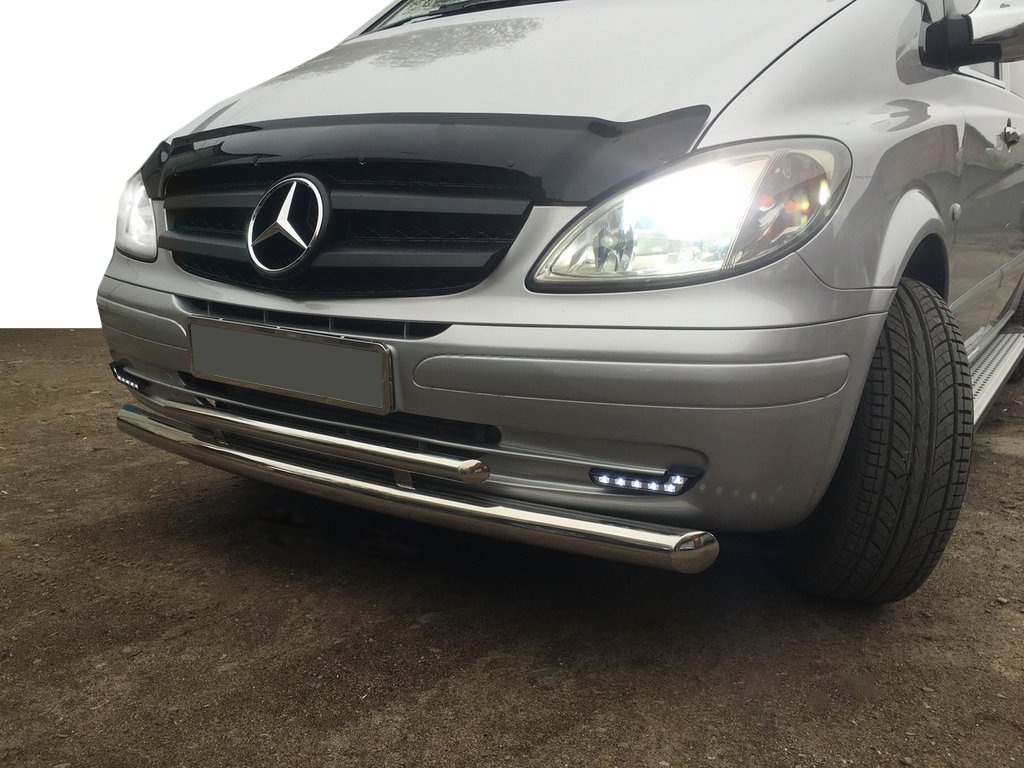
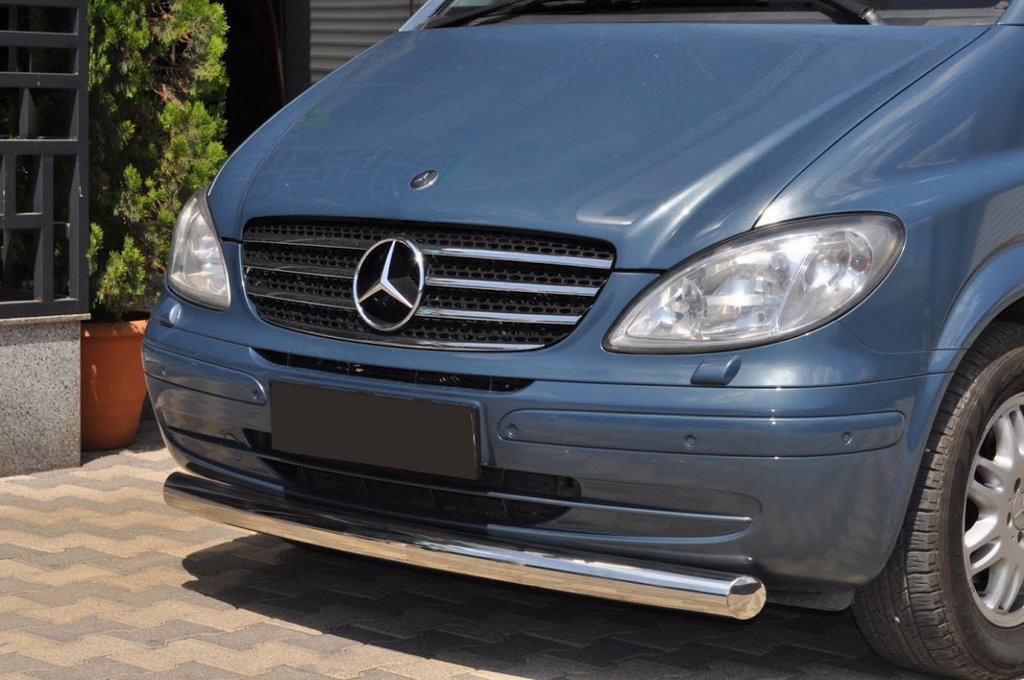
Model with “whiskers” and other complex combinations. These are more of a design solution – a combination of the first and second types.


Bushes, low-hanging branches, and other obstacles are better to hit with special protective equipment rather than a freshly painted hood. Without it, you risk bending the steering rod, damaging the differential, or breaking the oil pan.
Of course, the bull bar itself will be destroyed and cannot be repaired, but the body damage will be less severe than without it. There is a risk that the front guard may damage some body parts, but it’s better to dent the fenders than deal with a displaced engine. As for the other vehicle in the accident, that’s for insurance companies to worry about.
During a collision, most of the impact energy is absorbed by the deformation of the front or rear guard. This significantly softens the blow, reducing injuries and potentially saving lives. So if you decide to buy a bull bar, don’t listen to those who say it’s ugly (beauty is subjective), illegal (it’s not), or a waste of money (we believe it’s a very useful accessory).
And finally, a few more advantages: bull bars are convenient to step on for a better view, you can mount additional lights on them, and even wrap a tow rope around them.


Front and rear bumper guards can be made from tubes with a diameter of 28–110 mm and wall thickness of 1–3 mm.
It is commonly believed that bull bars originated in Australia. In fact, the first versions appeared in America as wooden “gates” mounted on pickups, called “cattle pushers” (used to drive livestock).
Later, similar accessories appeared in Australia under the name “roo bar” (kangaroo grille). Then, under the name “Front Schutz Bugel” (protective steel bar), they became popular in Germany. Eventually, they reached the CIS countries, where they are still known by various names – bull bars, horseshoes, protective or power body kits, front or rear guards, bars, grilles, hoops, etc.
First of all, quality body kits for tuning SUVs and vans cannot be very cheap. A front guard priced at $50–100 is a fake that won’t benefit your car. The optimal price range is $200–300.
If you want to buy one, we recommend choosing a design with a lower grille made of tubes (with “teeth”) to protect the most sensitive parts of the car and avoid damage from rocks or stumps.
Remember, poor-quality bars are screwed to the bumper beam or towing hooks. Such tuning is useless – it won’t protect in collisions, won’t cover the oil pan or differential, and you won’t be able to attach a tow rope. Proper installation is done to the lower frame beam.
Avoid products painted with so-called hammer enamel, which chips easily. Rust will get under the coating, and after the first winter, the accessory will be ruined.
All welds must be neat and even (easy to check visually). Tubes at bends should not be deformed or wrinkled.
The best material for front and rear guards is stainless steel, with prices starting from $200 (in our tuning store – from $190).
Shipping to EU
Wholesale and retail
Own warehouse
Опис продукту
Подарунки не надаються при оформленні покупки у кредит під 0,01% або при покупці частинами.