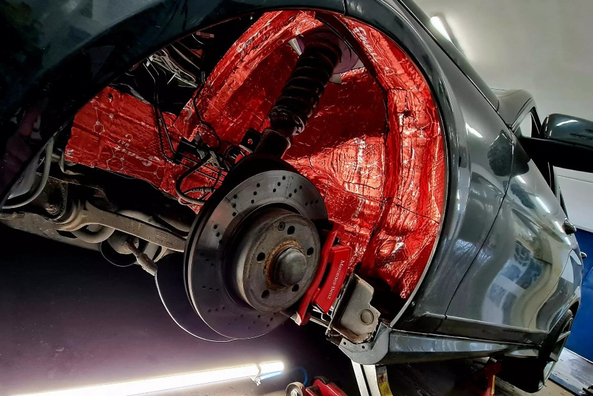
Road noise — one of the main irritants inside a car cabin. Tire hum, stone impacts, and vibrations from the wheel arches penetrate inside, especially at speeds over 60 km/h. Wheel arch soundproofing helps reduce this effect, but is it worth the time and money? Let’s look at the advantages, drawbacks, and details of the process. You can also significantly improve comfort in your car by using tuning accessories, widely available in our online store.
Advantages of wheel arch soundproofing
- Noise reduction by 5–15 dB: The cabin becomes quieter, especially on highways.
- Corrosion protection: Materials (vibration dampers, sound insulation) protect metal from rust.
- Improved acoustics: Bass sounds in music are clearer without unwanted vibrations.
- Increased comfort in winter: Less noise from studded tires.
Disadvantages and risks
- Increased vehicle weight: By about 3–7 kg, slightly affecting fuel consumption.
- Installation complexity: Requires removing wheel liners, skill, and time.
- Risk of mistakes: Incorrect application may cause peeling or moisture ingress.
- Costs: Materials and workshop labor require a budget.
When is soundproofing really needed?
- Older cars without factory protection.
- Frequent highway or gravel road trips.
- Studded tires in winter.
- Car audio enthusiasts.
Useful materials for the job
- Vibration insulation — to dampen vibrations on metal.
- Anti-gravel coatings — for external protection.
- Liquid compounds — for treating complex areas.
Wheel arch soundproofing — a useful upgrade for those annoyed by road noise. Test it on a noisy road to see if it’s right for you.