28.09.2020
2655
Have you ever wondered why your engine, in hot weather, does not “explode” from overheating, why does it continue to function as if nothing had happened? And the answer to everything is antifreeze.
This liquid, and in wide circles - coolant, was produced more than a hundred years ago with the release of the first cars with an internal combustion engine. But in those days, science was not so developed, and antifreeze was replaced by ordinary cold water. And the first full-fledged, as we are used to seeing now antifreezes, appeared in the 40s of the last century.
Currently, coolants in Europe are marked with the letter "G" and are divided into 3 categories:
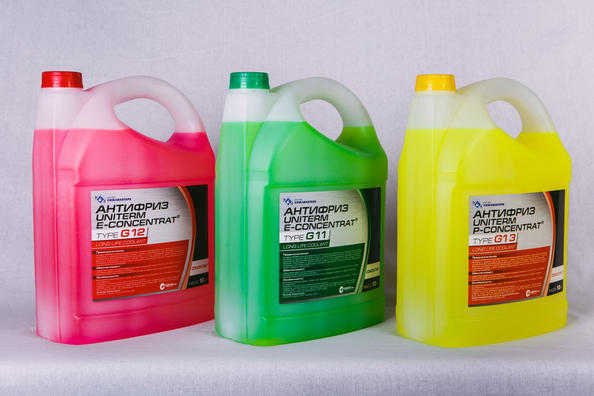
Thanks to the color of the antifreeze, you can quickly detect a leak and not confuse it with other liquids.
The main functions of antifreeze are as follows:
As mentioned earlier, the composition of antifreeze was withdrawn in the 40s, and until now, some brands continue to be produced with the same compositions. The category of antifreeze depends on the amount of additives in it. But already, depending on this, the antifreeze has its own special color and durability increases.
But there are significant drawbacks in this liquid. First of all, it is a very strong poison: in large quantities it can lead to the death of a person. And secondly, it is both a healer for certain metals, and at the same time a destroyer.
Shipping to EU
Wholesale and retail
Own warehouse
Опис продукту
Подарунки не надаються при оформленні покупки у кредит під 0,01% або при покупці частинами.