

















































 Author: Radomskyi Maksym Vasyliovych
The Jeep Cherokee with the factory index KL is the fifth generation of the model, produced from 2013 until February 2023. It is a mid-size crossover on a transverse platform with front-wheel drive or all-wheel drive, a nine-speed automatic, and—in the Trailhawk version—a genuine rear differential lock. There are plenty of these cars in Ukraine: imported from the USA, bought in Europe, pre-facelift and updated versions. We break down how to tell the versions apart, which engines were fitted under the hood, how the KL story ended, and what Jeep unveiled as its replacement in 2025.
Contents
- KL generation: pre-facelift and facelift
- Body and dimensions
- Engines and transmissions
- All-wheel drive and Trailhawk
- What happened to the Cherokee after 2023
- New Cherokee 2026: how it differs from the KL
- How not to make a mistake with accessories for the KL
KL generation: pre-facelift and facelift
The KL premiered on March 27, 2013 at the New York Auto Show as a 2014 model year vehicle. Up to 2017 the cars were assembled in Toledo (Ohio), after which production was moved to the plant in Belvidere (Illinois); for China, the crossover was produced by the GAC Fiat Chrysler joint venture.
2014–2018 model years
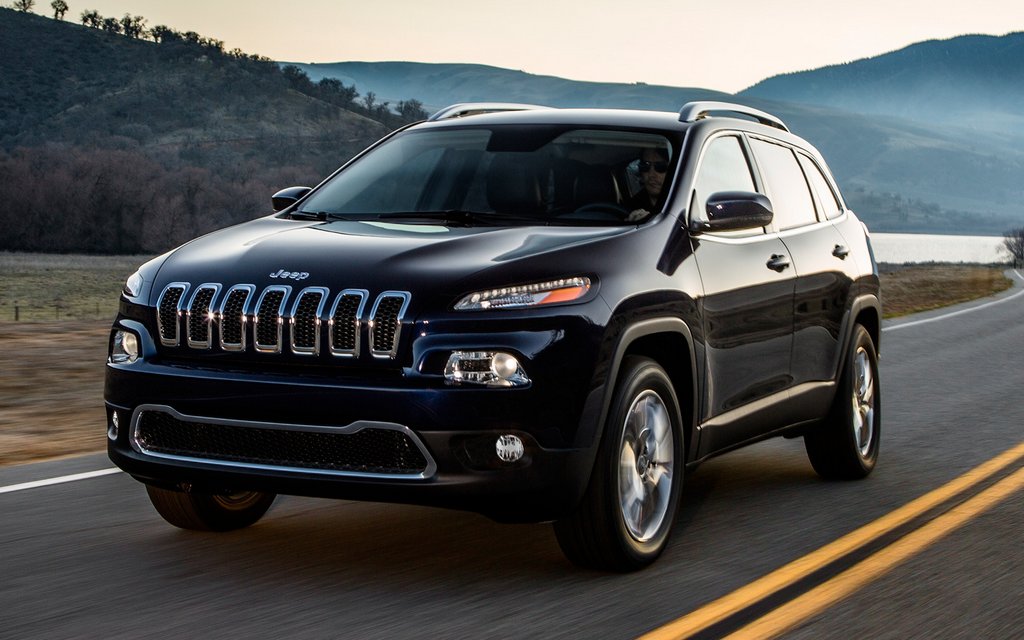
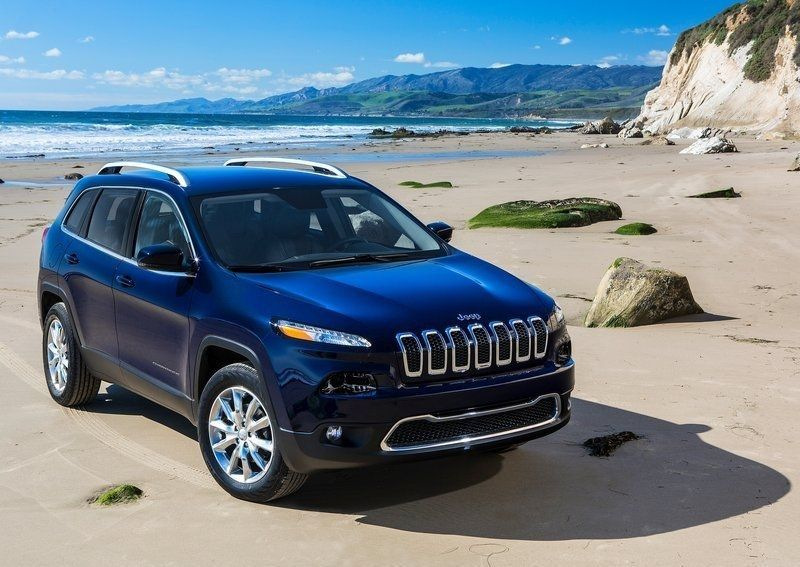
The pre-facelift KL is instantly recognizable by its split lighting: narrow strips of daytime running lights at the top, above the signature seven-slot grille, and the main headlights lower down in the bumper. It was this “squinty” look that once divided the brand’s fans.
2019 model year facelift
The updated version was shown in January 2018 at the Detroit Auto Show. The front end was completely redesigned: a new bumper, a lightweight aluminum hood, LED projector headlights appeared in the familiar Jeep format, and the grille was lowered. The tailgate was made composite and lighter, the cargo opening became wider, and hands-free opening was added. An important detail for owners: a US-market vehicle of the 2019 model year may be listed in documents as a 2018 production year, so the year in the registration is not always enough to tell whether you are looking at a pre-facelift or an updated version.
Body and dimensions
The KL is built on the FCA Compact Wide platform: transverse engine layout, independent suspension on all wheels. Dimensions according to the manufacturer’s official specification (2014 model year):
| Parameter | Standard versions | Trailhawk |
|---|---|---|
| Length | 4 624 mm | 4 624 mm |
| Width | 1 859 mm | 1 904 mm |
| Height (with roof rails) | 1 670–1 710 mm | — |
| Wheelbase | 2 699–2 700 mm | 2 719 mm |
| Approach / departure angle | 16,7–21,0° / 24,6–27,3° | 29,9° / 32,2° |
| Number of seats | 5 | 5 |
The Trailhawk is wider due to fender flares, and its different bumpers provide much better approach and departure angles—this directly affects the compatibility of mud flaps, side steps, and trim pieces.
Engines and transmissions
The engine range depended on the market. In Europe the Cherokee received diesels; in the USA, gasoline engines.
| Engine | Power | Where it was offered |
|---|---|---|
| 2.4 Tigershark MultiAir (gasoline) | 184 hp (from 2019 — 180 hp) | USA, selected markets |
| 3.2 Pentastar V6 (gasoline) | 271 hp | USA, Europe |
| 2.0 turbo Hurricane (gasoline, from 2019) | 270 hp | USA |
| 2.0 MultiJet II (diesel) | 140 or 170 hp | Europe |
| 2.2 MultiJet II (diesel) | 185 or 200 hp | Europe |
The main gearbox is the nine-speed ZF 948TE automatic with a ratio spread from 4,71 in first to 0,48 in ninth. In Europe, the entry-level 140-hp diesel was paired with a six-speed manual. The V6’s strong suit is towing: after the facelift, the manufacturer claimed up to 4 500 lb (about 2 t) for a trailer.
All-wheel drive and Trailhawk
Jeep offered three all-wheel-drive systems. The base Active Drive I completely disconnects the rear axle in normal driving and engages it automatically when the wheels start slipping—saving fuel. Active Drive II adds a two-speed transfer case with low range. Active Drive Lock is available only on the Trailhawk: in addition to low range, it adds a mechanical rear differential lock. All systems work together with the Selec-Terrain mode selector.
Trailhawk is not a separate model, but the most off-road-ready Cherokee trim: different bumpers, underbody protection, tow hooks, extended wheel arches, and a full-size spare wheel. After the facelift, with the 2.0-liter turbo engine, it has a 51,2:1 crawl ratio—an uncommon figure for a crossover on a passenger-car platform.
What happened to the Cherokee after 2023
On February 28, 2023, Stellantis halted the Belvidere plant for an indefinite period, and the last Cherokee KL rolled off the line. The company explained the decision by rising electrification costs; sales of the model had noticeably declined by then. No direct successor was announced at the time, and for more than two years there was no model named Cherokee in the Jeep lineup.
New Cherokee 2026: how it differs from the KL
On August 21, 2025, Jeep presented the sixth-generation Cherokee (factory index KM)—a 2026 model year vehicle. It is assembled in Toluca (Mexico) on the STLA Large platform, and it is Jeep’s first full hybrid that does not need to be plugged in. A detailed review of the new model is in the article about the new Jeep Cherokee 2026; here are only the key differences from the KL.
| Parameter | Cherokee KL (2014–2023) | Cherokee KM (from 2026) |
|---|---|---|
| Platform | FCA Compact Wide | STLA Large |
| Length | 4 624 mm | about 4 775 mm |
| Wheelbase | 2 700 mm | about 2 870 mm |
| Powertrain | gasoline 2.4, 3.2 V6, 2.0 turbo; diesels in Europe | 1.6 turbo hybrid, 210 hp combined |
| Transmission | 9-speed automatic | hybrid power-split, two motor-generators |
| Drive | front or all-wheel drive | Active Drive I all-wheel drive as standard |
A 1,03 kWh liquid-cooled traction battery allows short distances to be driven on electricity. The 1.6-liter gasoline engine itself produces 177 hp. The new body is deliberately boxy, the taillights are styled like a jerry can, and the cargo area, according to Jeep, is about 30% larger than its predecessor. No KL body part fits the KM—this is a completely different vehicle.
How not to make a mistake with accessories for the KL
The experience of our managers shows that most ordering mistakes are not due to the product itself, but to confusion about the generation:
- Cherokee is not Grand Cherokee. Parts from the Grand Cherokee WK2 or WL do not fit the KL, and the phrase “Cherokee 2021” without clarification can mean any of these models.
- Count the facelift by model year. For mud flaps and wind deflectors, the cutoff is the 2019 model year: pre-facelift and updated versions use different sets.
- Check Trailhawk separately. Because of different bumpers and fender flares, mud flaps and side steps from the standard version may not match the body contour.
- Choose crossbars by the type of rails. For rails with a gap to the roof there are vehicle-specific crossbars, while for rails that sit flush to the roof you need different, original crossbars.
Vehicle-specific mud flaps for the Cherokee KL are split into 2013–2019 and 2019+ versions, crossbars for roof rails mount in the factory points, and in the floor mats for the Cherokee KL section there are polyurethane Stingray, EVA, and textile sets—including separate options for vehicles from 2018. The full range for this body is in the Jeep Cherokee KL tuning catalog, and the rest of the brand’s models are on the Jeep tuning page. If you are unsure about the model year, send the manager a photo of the front end and the VIN—he will select the correct version.
We deliver via Nova Poshta throughout Ukraine; orders from 15 000 ₴ are delivered free of charge with our own transport.