07.06.2026
991
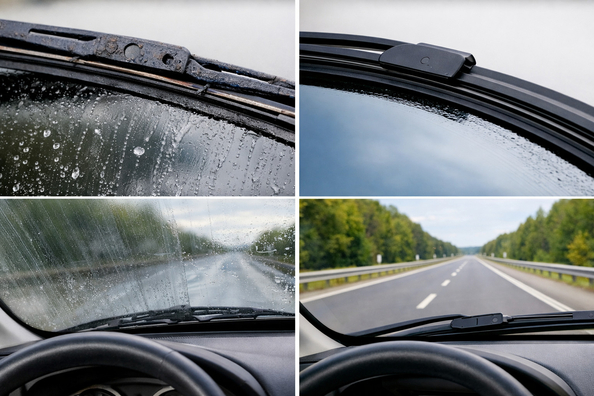
If a car is driven mostly in the city, in the warm season, and without long mileages, cheap framed wipers can do the job fine. But as soon as you add highway driving, wet snow, night trips, ice on the glass, or daily use, the difference between cheap and decent blades stops being theoretical and becomes literally visible: streaks, chatter, noise, and loss of contact with the windshield quickly eat up any savings.
You should compare more than just the price on the shelf. Installation and compatibility, noise level, real service life, behavior at speed, winter practicality, and how often you’re willing to replace the blades all matter. On average, it’s worth checking them every six months, and usually replacing them every 6–12 months—or sooner if you already have streaks, squeaks, or missed areas.
The main question isn’t whether a blade clears the windshield on the first day after purchase. Almost any new blade works acceptably at first. The point is how long it maintains even pressure, how quietly it operates, and whether it loses effectiveness in cold weather, rain, and at speed.
Cheap framed models win on low price and simple installation. Proper options—beam (frameless), hybrid, and silicone—more often win on stable contact with the glass, are less affected by dirt in the joints, squeak less, and often last longer. So paying extra doesn’t always make sense—only when your driving conditions truly put load on the wipers.
Installation and compatibility. Many cars use the standard hook-type mount, but you still need to verify blade length and the adapter. The wrong size causes missed edges or can catch the seal.
Noise. Squeaking and hopping often appear not right away, but after a few months. Cheaper rubber elements harden faster, so they handle morning rain and cold worse.
Service life. Even good blades aren’t eternal, but beam and silicone models often last longer than basic framed ones. If the car sits in the sun and is driven through dust and road chemicals, lifespan drops in any case.
Practicality. In winter, an open frame is more likely to clog with ice and snow. Beam and hybrid designs are more stable here because they have fewer exposed joints.
Total cost of ownership. A cheap blade isn’t always cheaper in the end. If you have to replace it more often, or it performs poorly exactly when you need maximum visibility, the “savings” are questionable.
| Option | Strengths | Weaknesses | Who it suits |
|---|---|---|---|
| Cheap framed | Low price, easy replacement, sufficient for calm city driving | Wear faster, noisier more often, handle snow and ice worse | For those who drive little, rarely go on the highway, and are willing to replace blades more often |
| Decent beam (frameless) | Better contact with the glass, quieter operation, fewer winter issues | Higher price, you need to pay closer attention to compatibility and length | For daily city driving, highways, rain, and winter use |
| Hybrid or silicone | Longer service life, stability at speed, fewer streaks, better cold-weather performance | Most expensive, not always worth overpaying for occasional trips | For high mileage, commercial vehicles, outdoor parking, and frequent bad-weather driving |
If you boil it down to one line: the cheap option is bought for the lowest entry price, while a decent one is bought for stable performance throughout the season.
DD Tuning expert comment: the most common mistake is looking for the “most expensive blade” without checking the length, mount type, and the condition of the windshield itself. The second typical story is installing a cheap open-frame blade on a car that spends winter nights outdoors: after the first wet snow, the joints freeze, and the person thinks the problem is the brand, not the design. Another frequent misstep is replacing blades without cleaning film and grime off the glass.
This is the working minimum. They fit if the car isn’t driven much, mostly in the city, and the driver doesn’t delay replacement until they’re completely worn out. Their advantages are simple design and low price.
The weak spot is the open frame and basic rubber. In cold and dirt, the joints work worse, uneven pressure appears, along with streaks and squeaks. This is where savings often backfire: the blade still seems new, but it’s already unpleasant in use.
This is the most balanced option for most cars. They distribute pressure better along the length, run quieter, and usually stay more stable at speed. In winter, the advantage is fewer places for ice to build up.
Paying extra here is usually justified if the car is on the move every day. It’s especially noticeable on highways, in rain, and during shoulder seasons, when basic blades start to chatter or leave a thin water film.
This is a choice not just “to wipe,” but to avoid coming back to the issue for longer. Hybrid models combine better protection of the mechanism with good aerodynamics, while silicone often wins on lifespan and smoother operation. Some silicone blades also leave a water-repellent effect on the glass.
But they don’t make sense for everyone. If the car goes out once a week around town, the difference may not pay off. But for frequent trips, rain, winter, high speeds, and commercial use, it’s a practical—not cosmetic—benefit.
For calm city use without big mileages, you can go with cheap framed blades—just understand you’ll likely need to replace them more often. The key is not to wait until the rubber cracks or the blade starts smearing right in front of your eyes.
If the car often runs on the highway, especially in rain, it’s better to look at beam or hybrid models. At speed, it’s not only the edge material that matters, but also how the blade holds up in the airflow and whether it loses pressure in the middle.
For winter, outdoor parking, and morning drives through snow, a cheap open frame is the weakest scenario. A better design means less hassle, less ice in the mechanism, and more consistent clearing. For high annual mileage or a work vehicle, the logic is the same: a more expensive blade more often pays back through lifespan and predictability.
| Scenario | What to choose | Why |
|---|---|---|
| Occasional city trips in the warm season | Cheap framed | Minimum cost, light load on the blades |
| Daily city driving year-round | Beam (frameless) | Quieter, more stable, less annoying in daily use |
| Frequent highway driving | Hybrid or quality beam (frameless) | Hold better contact with the glass at speed |
| Winter, snow, outdoor parking | Beam (frameless) or hybrid | Clog less with ice and don’t lose shape as quickly |
| Commercial vehicle or high mileage | Silicone or hybrid | Often last longer and mean less downtime for replacements |
Paying extra makes sense when wipers genuinely affect safety and peace of mind: frequent highway driving, night trips, rain, winter, tall windshields, daily work use. In such conditions, pricier blades win not by being “premium,” but by running quieter, maintaining better contact, and reducing the risk of blind zones appearing in the middle of a downpour.
If you need selection for a specific car, it makes sense to go straight to wipers by category. If you’re choosing between designs, it’s useful to read separately about beam (frameless) blades. And when the question is more about wear and replacement interval, this article will help: when to replace wipers.
A separate expensive scenario is heated wipers, but it’s a niche solution. They make sense where icing is constant and the driver is willing to pay not for versatility, but specifically to fight ice.
From a customer’s experience: a driver was looking for the cheapest set for a daily car that does a lot of highway miles and sleeps outside. After a few months, the cheap framed blades started streaking and getting noisy, so he switched to beam (frameless) ones. In the end, he got quieter operation, better visibility in the rain, and stopped thinking about wipers in the middle of the season.
Cheap wipers have their place if the use case is simple: city driving, warm weather, short mileages, and a willingness to replace them without regret. But for winter, highways, daily use, and work vehicles, decent beam, hybrid, or silicone blades usually turn out more cost-effective thanks to longer life, quieter operation, and consistently clear visibility.
Most often, “saving” backfires not on the receipt, but at the moment when the windshield clears unevenly—exactly in the rain or at speed. This material is based on real selection experience, practice, and real-world scenarios, so the main advice is simple: choose wipers not by the lowest price, but for your driving conditions.
| ✔ | Cheap frame wipers wear out faster and start making noise more often. In cold weather and dirt, they hold even pressure worse, which leads to streaks and missed spots. |
| ✔ | Normal frameless blades maintain better contact with the glass and are usually quieter in operation. This is especially noticeable on the highway, in the rain, and during daily commutes. |
| ✔ | Hybrid and silicone models have better service life and behave more consistently at speed. For high mileage or a work vehicle, this reduces how often they need to be replaced. |
| ✔ | Frameless and hybrid wipers are less likely to get clogged with ice and snow in winter. This makes them more practical for outdoor parking and cold morning starts. |
| ✔ | It is worth comparing not only the price, but also compatibility, length, noise, and actual service life. This approach helps avoid buying a product that will quickly start smearing or squeaking. |
| ✘ | Cheap frame wipers wear out faster and more often start making noise. In cold weather and dirt, they hold even pressure worse, which leads to streaks and missed spots. |
| ✘ | An open frame in winter easily gets clogged with ice and snow. Because of this, the blades can lose effectiveness exactly when visibility matters most. |
| ✘ | The wrong length or mount creates practical problems: missed spots along the edge or rubbing against the seal. Saving money on the purchase here can easily turn into inconvenience and poor cleaning. |
| ✘ | The cheapest option is not always cheaper in the end, because it has to be replaced more often. If the blade performs poorly in rain or snow, the real benefit of the savings disappears. |
Shipping to EU
Wholesale and retail
Own warehouse
Опис продукту
Подарунки не надаються при оформленні покупки у кредит під 0,01% або при покупці частинами.