















































 Author: Radomskyi Maksym Vasyliovych
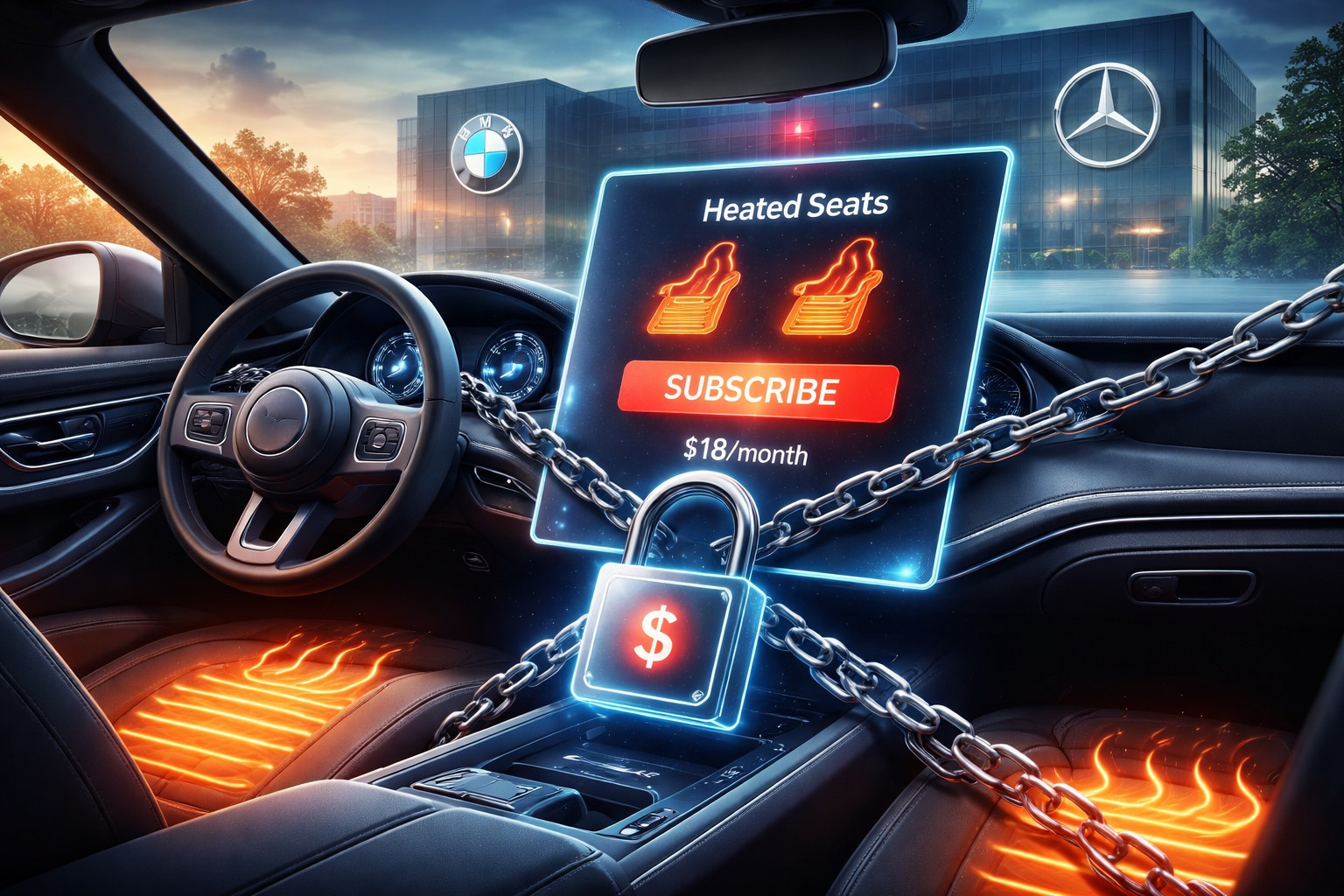
Modern automakers are increasingly trying to turn the car into a «gadget on wheels». Buying a car for a lot of money, an owner may discover that some features work only for an additional fee. For example, a debate recently exploded about heated seats by subscription – when the manufacturer предлагает paying monthly for an option that is already technically installed in the car. Similarly, using Autopilot or unlocking the engine’s full power may also come with recurring payments. This raises the question: do you really own your car if the manufacturer can remotely disable its capabilities for non-payment?
This trend revives the idea of the «death» of the traditional concept of private ownership. In the past, you bought a car – and all its capabilities were yours forever. Now, part of the functionality is effectively rented to you. Some experts compare this approach to software or mobile app subscriptions. Newer cars, especially EVs, increasingly depend on software updates and an internet connection. (By the way, there are plenty of misconceptions about EVs – read our article «Electric Car: Myths and Reality».) But subscriptions for features are no longer a myth – they are a reality drivers are facing.
Examples of subscription-based features across different brands
In recent years, automakers have tried different ways to monetize their cars’ features after the sale. Here are some of the loudest examples where car owners were asked to pay extra for options that were already present:
- BMW. In 2022, the German brand sparked a wave of outrage by introducing a paid subscription for heated front seats and the steering wheel. A monthly fee of about $18 for comfort that used to be included in the car’s price shocked many. After a strongly negative customer reaction, BMW was forced to abandon the idea. Still, the company didn’t drop the monetization concept – now, instead of subscription-based basic comfort, it offers «advanced» digital functions (for example, enhanced driver-assistance systems).
- Mercedes-Benz. The manufacturer introduced a paid service, Acceleration Increase, for the EQE and EQS electric models. With no technical changes, the subscription adds +20% power, improving 0–100 km/h acceleration by almost a second. This advantage costs about $60 per month (for EQE) or $90/month (for EQS). There are also discounted annual plans, as well as a one-time payment option of ~$2000–3000 for permanent unlocking of quicker acceleration. In practice, Mercedes owners pay twice for their EV’s capabilities – first at purchase, and then to «unlock» its full potential.
- Volkswagen. In the UK, owners of the VW ID.3 electric hatchback were offered a subscription to unlock an additional 27 hp on top of the standard ~201 hp. The £16.5-per-month subscription also increases torque and improves acceleration, making the car more dynamic. The alternative is a one-time payment of ~£650 for permanent activation. Interestingly, technically all ID.3 cars already have this power reserve, but it is software-limited at the factory. This way, Volkswagen monetizes what the buyer has already purchased while also simplifying production (one identical motor for all trims).
- Tesla. The EV pioneer also uses subscriptions. The most famous example is Full Self-Driving, available via subscription for ~$199 per month (or a one-time payment of about $15 000). In addition, Tesla has offered other paid unlocks: for example, a $2000 one-time purchase of Acceleration Boost, which reduces acceleration time for some models. There were cases where base Teslas had higher-capacity batteries that were software-limited – unlocking the «extra» miles of range was only possible for an additional fee. So even driving range could be turned into a product for extra money.
- Toyota. Subscriptions are also creeping into the mass market. Toyota was criticized after it emerged that the remote engine start feature from the key fob in some models works free only for the first 3 years. After that, owners must sign up for a paid Toyota Connected subscription (about $80 per year) to continue using remote start. While the sums are relatively small, the principle angered customers: paying every year for something the key can already technically do.
As you can see, both premium manufacturers and mainstream brands are experimenting with similar models. Even owners of top-tier models aren’t protected from extra charges. For instance, BMW M5 F90 vs Mercedes-AMG E63 S: comparison of German super sedans shows that these cars are packed with cutting-edge technology. But their makers could also demand payment in the future to unlock certain digital «features» built into the car.
| Manufacturer / model | Locked feature | Subscription price | One-time activation |
|---|---|---|---|
| BMW (2022) | Heated front seats, steering wheel | $18/month or $180/year | $415 forever (idea abandoned) |
| BMW | Adaptive suspension (some models) | $29/month (after a free trial period) | No data on a one-time buyout |
| Mercedes EQE | +20% acceleration (Acceleration Increase) | $60/month or $600/year | $1950 forever |
| Mercedes EQS | +20% acceleration (Acceleration Increase) | $90/month or $900/year | $2950 forever |
| VW ID.3 Pro | Additional 27 hp | £16,50/month | £649 forever |
| Tesla (FSD) | Full autopilot (Full Self-Driving) | $199/month | $15 000 forever |
| Tesla (Model 3) | Acceleration Boost (+50 hp) | — | $2000 one-time |
| Polestar 2 | Additional 68 hp | — | $1195 one-time |
| Toyota | Remote start from the key fob | ~$8/month (after the 3-year free period ends) | No (an active subscription is required) |
Why are manufacturers introducing subscriptions for features?
From the automakers’ perspective, the «features by subscription» model has several strong arguments in its favor:
- Additional profit. Selling cars is a high-cost business, and add-on subscriptions provide steady revenue after a one-time sale. Companies can earn from customers for years by selling «updates» or expanded functionality.
- Covering service costs. Many modern features (for example, advanced navigation services, semi-autonomous driving, voice assistants) require ongoing server operation, map updates, and data transmission over the internet. All of that costs the manufacturer money. A monthly user fee helps offset infrastructure and support expenses.
- Flexibility for the customer. A «pay when you need it» approach allows drivers to activate a certain option later if it becomes necessary. For example, someone didn’t order a parking assistant at purchase, but a year later decides it would be useful – just buy a subscription and the feature becomes available immediately. It’s convenient because it doesn’t force you to overpay for options you might not use.
- Simplified trim levels. A manufacturer can install all the necessary hardware on every vehicle at the factory (standardization). Then customers are offered paid unlocking of certain capabilities. This simplifies production and logistics: instead of dozens of trim levels with different equipment, there is one base setup, and differences are implemented via software. For the manufacturer it’s savings, and for the buyer it’s potentially faster delivery of a car with the desired features (no need to wait for a special version).
From a marketing standpoint, automakers present subscriptions as a benefit for consumers: supposedly, you pay only for what you truly need and can try a feature whenever you want. Some subscriptions even include a free trial period so the customer can evaluate the option’s usefulness. Also, thanks to OTA updates (over-the-air, remote updates), manufacturers can add new capabilities to cars that have already been sold – meaning the car can even improve over time, if you’re willing to pay.
Risks and downsides for owners
Despite the manufacturers’ arguments, many car enthusiasts view this trend negatively. Subscriptions effectively blur the line between ownership and renting. Key complaints from car owners include:
- A feeling of «paying twice». A person has already paid a significant amount for the car, but to fully use all its capabilities they are forced to pay again and again. It feels like paying twice for the same thing – especially when it involves hardware that is already installed (heated seats are there, but «locked»).
- Uncertainty about ownership rights. If a manufacturer can remotely disable a feature, the question arises: what stops it from disabling other capabilities or even the car itself? This is not just a hypothesis – some finance companies install modules that block the engine from starting if loan payments aren’t made. With subscriptions, the manufacturer retains control over part of the functionality. The owner feels the car isn’t fully theirs.
- Extra hassle when reselling. Subscriptions are tied either to the car or to the owner’s account. If a feature is activated by subscription, it’s unclear what the next buyer gets when the car is resold. Will the paid services transfer? Will they have to pay again to unlock them? This complicates the used-car market. Some manufacturers (like Volkswagen with the ID.3) tie one-time activation to the car – so the function remains after resale. But if it’s a subscription, the new owner will have to subscribe again.
- Dissatisfaction and brand image. As BMW’s experience showed, users react very painfully to paid access to basic functions. A wave of criticism in the media and on social networks can seriously damage the reputation of a brand accused of greed. As a result, BMW backed off the paid heated-seats idea. Other companies also risk losing customer loyalty if they introduce such monetization models too aggressively.
- Safety and reliability concerns. Another aspect is dependence on connectivity and servers. If the subscription isn’t renewed or the manufacturer’s service is unavailable (outage, hacking, company bankruptcy), the owner may suddenly lose access to certain capabilities of their own car. This raises concerns: could cars turn into «bricks» on wheels if support disappears? Owners want guarantees that critical systems (brakes, airbags, etc.) won’t depend on payments.
For now, manufacturers are rolling out subscriptions cautiously, weighing market reaction. The most scandalous cases (like paid heated seats) have been adjusted or canceled. Often the fee is charged specifically for «extra» features you can live without (comfort, performance, entertainment), leaving basic capabilities untouched. Still, the trend is clearly emerging. If customers agree to pay, companies will keep expanding the list of paid options.
Conclusion: is there an alternative?
Subscriptions for car features cast doubt on the completeness of private car ownership. In a world where «you own it only as long as you pay», calls to protect consumer rights are growing louder. Regulators may eventually step in to limit automakers’ appetite and guarantee buyers a basic set of rights when purchasing a car.
On the other hand, there is always the option to say «no» to these models: don’t subscribe to paid options and vote with your wallet by choosing cars without intrusive service payments. And most importantly, there are things a manufacturer can’t take away or disable remotely. For example, physical upgrades and accessories remain fully the driver’s property. You install a spoiler or new floor mats – and no one can force you to pay a subscription to use them. Unlike virtual features, such improvements are one-time and permanent. So you can personalize your car without subscriptions – it’s worth taking a look at accessories for Volkswagen ID.4 and other models that add comfort and style with no monthly fees.
Ultimately, the «death of private ownership» in the automotive world hasn’t happened yet – but the warning signs are already there. If manufacturers continue to blur the line between owning and renting features, consumers will have to decide whether they are ready to accept these rules of the game. Time will tell whether the car-as-a-service model takes root, or whether owners will defend their right to fully control the car they bought.