05.01.2026
539
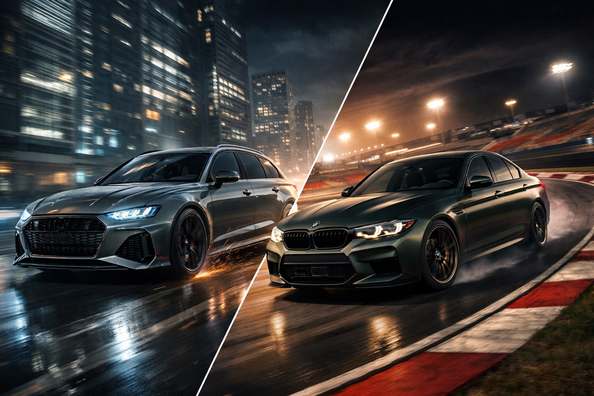

Audi RS6 Performance and BMW M5 CS are two supercars in family car bodies. Both deliver stunning acceleration dynamics. The Audi RS6 Performance accelerates from 0 to 100 km/h in about 3.4 s, while the lighter BMW M5 CS manages it in around 3.0 s. In practice, this means the M5 CS launches faster, although the quattro all-wheel-drive system on the RS6 ensures confident and stable acceleration under any conditions.
The top speed of both cars is electronically limited. The RS6 Performance is limited to 280 km/h as standard (up to 305 km/h with the Dynamic Plus package). The BMW M5 CS comes with the M Driver’s package, giving it a top speed of 305 km/h. On a straight line, both models demonstrate supercar-level speed. The high weight of the Audi (over 2 tons) is compensated by excellent traction and grip, while the lighter BMW, thanks to its lower mass (~1.8 t), feels even more dynamic. On winding roads, the M5 CS behaves sharply and precisely – its tuned chassis and stiffer springs minimize body roll. The RS6 Performance also handles high-speed corners well: the all-wheel drive with an active differential and upgraded suspension has reduced Audi’s typical understeer, though the laws of physics can’t be fully hidden. Overall, in terms of acceleration and handling, the M5 CS feels more race-oriented, while the RS6 provides confidence and stability even at the limit.
Both cars are equipped with large twin-turbo V8 engines, but there are nuances. Under the hood of the Audi RS6 Performance sits a 4.0-liter V8 with mild-hybrid technology, producing a colossal 630 hp (463 kW) and about 850 Nm of torque. This is the most powerful RS6 in the model’s history. The BMW M5 CS has a slightly larger 4.4-liter V8, delivering 635 hp (467 kW) and 750 Nm of torque – the M5 CS became the most powerful BMW M car at its debut. Both engines are paired with 8-speed automatic transmissions (Tiptronic in the Audi and M Steptronic in the BMW) and send power to all wheels.
The power delivery character differs slightly. The Audi’s V8 is famous for its incredible low-end torque – the peak 850 Nm is available across a wide rev range, providing explosive acceleration at any speed. The BMW offers slightly less but still impressive 750 Nm, and thanks to fine-tuning and lower weight, its throttle response is lightning-fast. In fact, the mid-range of the M5 CS is so lively that some reviewers note its acceleration feels even more thrilling than the heavier RS6. Both engines produce a characteristic deep V8 growl through their sports exhaust systems. In the RS6 Performance, engineers even reduced engine bay sound insulation so the cabin fills with the engine’s “chesty” tone. The M5 CS also minimizes insulation: its M Sport exhaust roars loudly and passionately, especially in Sport mode.
| Specification | Audi RS6 Performance (2023) | BMW M5 CS (2021) |
|---|---|---|
| Engine | 4.0 L V8 twin-turbo, mild-hybrid | 4.4 L V8 twin-turbo |
| Power, hp | 630 @ 6000 rpm | 635 @ 6000 rpm |
| Torque, Nm | 850 @ 2300–4500 rpm | 750 @ 1800–5950 rpm |
| 0–100 km/h | 3.4 s | 3.0 s |
| Top speed | 280 km/h (305 with option) | 305 km/h (limited) |
| Drive | All-wheel (quattro, 40:60 front-rear) | All-wheel (M xDrive, modes 4WD/4WD Sport/2WD) |
| Transmission | 8-speed automatic Tiptronic | 8-speed automatic Steptronic |
| Curb weight | ~2090 kg | ~1825 kg |
| Trunk (liters) | 565 (1660 with seats folded) | 466 (sedan only) |
| Seats | 5 | 4 |
The Audi RS6 Performance and BMW M5 CS are packed with advanced technologies that enhance both speed and safety. Starting with the chassis: the RS6 features permanent quattro all-wheel drive with a new sport differential that distributes torque between the rear wheels for better handling. The system can send up to 85% of torque to the rear axle, giving the car a rear-drive feel in tight corners. The M5 CS also has all-wheel drive (M xDrive), but unlike the Audi, the driver can switch between modes: standard 4WD, sporty 4WD Sport with more rear bias, and even fully rear-wheel-drive 2WD (Drift Mode) for maximum fun. Both cars have adaptive suspension: the RS6 offers air suspension or optional Dynamic Ride Control to minimize roll, while the M5 CS uses specially tuned dampers (from the M8 GC) and a chassis lowered by 7 mm for ultimate precision. As a result, the Audi offers everyday comfort and high-speed confidence, while the BMW impresses with a racing-style suspension setup yet remains relatively comfortable on smooth roads.
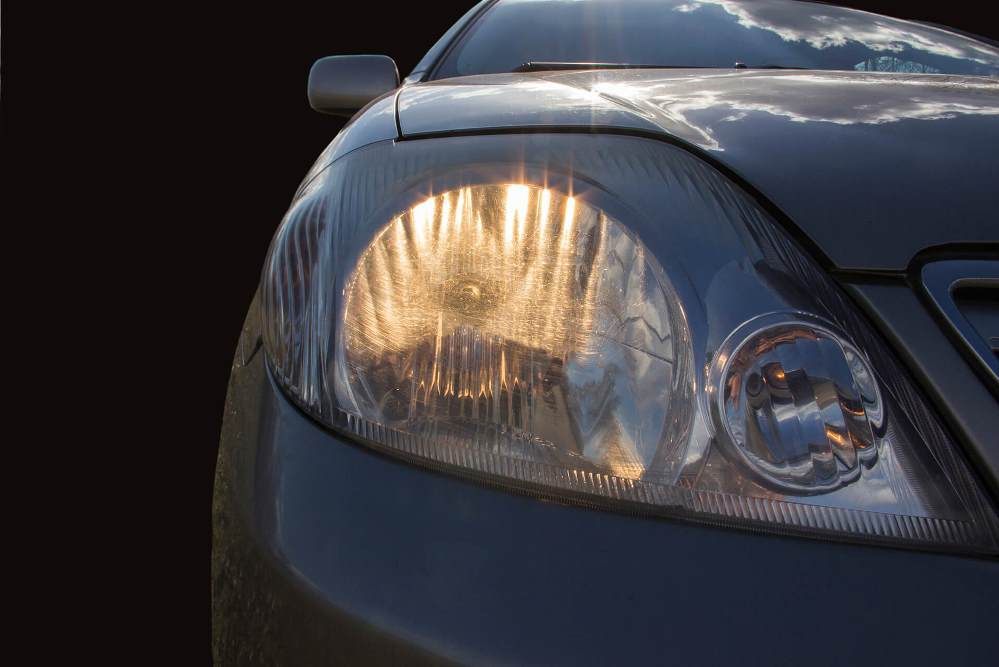
Modern tech is evident elsewhere too. The RS6 Performance includes all-wheel steering (rear-wheel steering) as part of the standard Dynamic package, improving maneuverability in the city and stability on the highway. The M5 CS doesn’t have this system, but its steering is sharp enough. Both cars feature top-tier braking systems: the Audi has massive discs with optional carbon-ceramic brakes (RS Dynamic Plus package), while the BMW M5 CS comes standard with M carbon-ceramic brakes (saving ~23 kg of unsprung mass and improving track endurance). Both models feature advanced matrix or laser headlights: the Audi offers matrix LED and laser high beam, while the BMW has Laserlight with yellow DRL accents on the M5 CS (a nod to race cars). Launch Control is available on both, enabling the claimed acceleration figures. In terms of driver assistance, both can be equipped with adaptive cruise control, lane-keeping systems, 360° cameras, and more – though the lighter M5 CS may omit some luxury options to save weight.
Infotainment and connectivity are also well covered. The Audi features the brand’s Virtual Cockpit digital instrument cluster with RS display modes, a large central MMI touchscreen, and an additional climate control screen – a tech-forward interior matching modern trends. The BMW M5 CS uses the iDrive system (version 7) with a central display and Live Cockpit Professional digital cluster; the CS version may feature unique M graphics (e.g., race-style indicators). Both support Apple CarPlay and Android Auto, offer premium audio systems (Bang & Olufsen in the Audi, Bowers & Wilkins or Harman/Kardon in the BMW), and provide extensive drive mode customization (Audi drive select profiles in the RS6, M1/M2 buttons on the M5 steering wheel for quick access to engine, suspension, steering, and AWD settings).
Inside, these cars are similar in class but different in spirit. The Audi RS6 Performance offers a full five-seat luxury wagon cabin. Material quality is top-notch: soft Valcona leather on sport seats with diamond stitching, Alcantara and carbon trim, and multimedia and instrument panels on par with the flagship A8. As the automotive press notes, the RS6 interior is so luxurious that “it wouldn’t embarrass even an Audi A8 limousine.” The RS6 provides generous space for driver and passengers, with ample legroom and headroom (especially in the rear thanks to the Avant body). RS seats with integrated headrests offer excellent lateral support while remaining comfortable for long trips. Standard features include three-zone climate control, seat heating and ventilation, keyless entry, and other premium amenities that make daily driving pleasant.
The BMW M5 CS, on the other hand, sacrifices some practicality for a race-car atmosphere. It has only four seats: instead of a rear bench, there are two individual bucket seats. All seats are thin carbon “buckets” with pronounced side bolsters (borrowed from the M3/M4), upholstered in premium black Merino leather with Mugello Red accents and stitching. Nürburgring track outlines are embroidered in the headrests, emphasizing the car’s sporty nature. The front M Carbon seats feature illuminated M5 logos and even a harness pass-through – just like in a true race car. The M5 CS cabin feels more minimalist and driver-focused: instead of a central armrest, there’s a fixed Alcantara cover with a small storage compartment (engineers even removed hinges to save a few hundred grams). Trim includes matte carbon, an Alcantara headliner, and an Alcantara-wrapped steering wheel with a red “12 o’clock” marker. These details create an aura of sporty exclusivity. Still, the M5 CS isn’t spartan: it retains dual-zone climate control, modern infotainment, and an audio system, though some features like ambient lighting or extra insulation may be reduced. Overall comfort is slightly below the standard M5 Competition due to firmer seats and suspension, but for driving enthusiasts, this interior is a true paradise – a race car cockpit hidden in a business sedan body.
Both contenders belong to the upper price segment, even among sports cars. The Audi RS6 Performance is a production model starting in Europe at around €140,000 (without options). In the U.S., its base price is about $130,000. Extra options (such as carbon-ceramic brakes, carbon trim packages, matte paint, etc.) can push the RS6 Performance price to $150,000 or more. The BMW M5 CS was a limited edition and even more expensive: in Germany, it started at around €180,400. In the U.S., this exclusive sedan started at about $142,000. For comparison, the more “mainstream” M5 Competition once cost around €130,000, so the CS version demanded a hefty premium for its lightweight and exclusivity. The M5 CS was produced for only one model year (2021), and all units quickly sold out to collectors and enthusiasts. Today, it can only be found on the used market, often at prices higher than the original. The Audi RS6 Performance, meanwhile, is available to order now, though its high price and image make it a rare sight on the road. In Ukraine, both cars cost significantly more after taxes and fees, but their audience consists of wealthy car lovers ready to invest in a unique driving experience.
Surprisingly, in the battle of two 600+ hp machines, practicality also matters – and here the Audi RS6 has the upper hand. The “Avant” (wagon) body gives the RS6 a large trunk: 565 liters of usable space under the cover, and up to 1680 l with the rear seats folded. That’s more than any rival super sedan and makes the RS6 a true family transporter – for vacations or furniture shopping alike. The wide trunk opening and low loading lip also make loading bulky items easier. The BMW M5 CS, being a sedan, offers a more modest 466-liter trunk. That’s enough for daily needs or a few suitcases, but it can’t match the Audi’s versatility. It’s also worth noting that the RS6 seats five, so you can take a fifth passenger (though the middle rear seat is a bit tight). The M5 CS seats only four, making it less flexible for family trips (as reviewers joked, “you can’t fit a third child”).
In everyday use, the RS6 Performance is more comfortable: its air suspension in Comfort mode smooths out bumps, body insulation (though reduced in the Performance version) remains business-class level, and the higher seating position plus AWD are handy in winter or wet conditions. The M5 CS has a stiffer chassis setup – on rough roads, its body transmits imperfections more directly, and the 20-inch Corsa tires are less forgiving over potholes. However, the BMW is slightly more compact, making parking and city maneuvers a bit easier (though both cars exceed 5 m in length). Both models consume plenty of fuel under spirited driving (around 12–15 l/100 km or more), so frequent refueling is the price of power. But buyers of such cars usually accept that, as they get everyday practicality that true supercars can only dream of.
Beyond numbers and charts, the real difference between the Audi RS6 Performance and BMW M5 CS lies in the emotions they deliver. The RS6 Performance is about confidence and versatility. Behind the wheel of this “super wagon,” you feel like the master of the road: the high-performance AWD lets you floor the throttle almost anywhere – the car just grips and rockets forward, rain or shine. The Audi gives a sense of total control: even at insane speeds, it remains stable, predictable, and its brakes (especially with carbon-ceramics) inspire trust – you know you can stop in time. Moreover, the RS6 has a dual personality: in Comfort or Auto mode, it cruises quietly and smoothly like a luxury grand tourer, seemingly forgetting its muscle. But switch to Dynamic and floor it, and the heavy wagon turns into a raging beast, pinning you to the seat with brutal acceleration. The RS exhaust note adds to the thrill: a deep bass at low revs and thunderous pops at high revs from the four large tailpipes. This car excites by blending everyday usability with madness in one package.
The BMW M5 CS delivers a completely different kind of emotion. It’s built to provide pure adrenaline and excitement in every fiber. From the moment you see its golden exterior accents (bronze grilles and wheels) and yellow DRL glow to the instant you sink into the deep buckets, the M5 CS screams exclusivity. On the road, it feels more “alive” and direct. Steering is razor-sharp: the slightest input changes direction like a race car. Acceleration is accompanied by a wild engine scream that climbs to the redline effortlessly. The M5 CS demands more attention and respect: though AWD, it’s ready to slide in 4WD Sport or fully rear-drive DSC-off mode. For skilled drivers, this means controlled drifts through corners and immense satisfaction. The CS chassis delivers phenomenal precision – the car turns in obediently and incredibly fast, with no excess roll, letting you feel like a racer on track. Yet it still flexes its muscles – you sense you’re driving nearly a 1.9-ton car, but one that’s slimmed down and honed for performance.
In conclusion, the Audi RS6 Performance and BMW M5 CS offer different shades of driving emotion. The Audi impresses with versatility: it’s an everyday car that can do it all – from calm family trips to lightning autobahn runs, without demanding compromises. The BMW, meanwhile, thrills with pure driving passion and exclusivity: every drive in the M5 CS feels like a special event that leaves a smile on your face. The RS6 suits those who want to combine practicality and supercar performance in one vehicle, valuing confidence behind the wheel in all conditions. The M5 CS is for the pure enthusiast, willing to trade some comfort for sharper sensations and the status of owning the hottest BMW. Both cars undoubtedly belong to the elite of modern performance machines, each realizing the dream of a car that delivers true driving exhilaration in its own way.
Shipping to EU
Wholesale and retail
Own warehouse
Опис продукту
Подарунки не надаються при оформленні покупки у кредит під 0,01% або при покупці частинами.