















































 Author: Radomskyi Maksym Vasyliovych
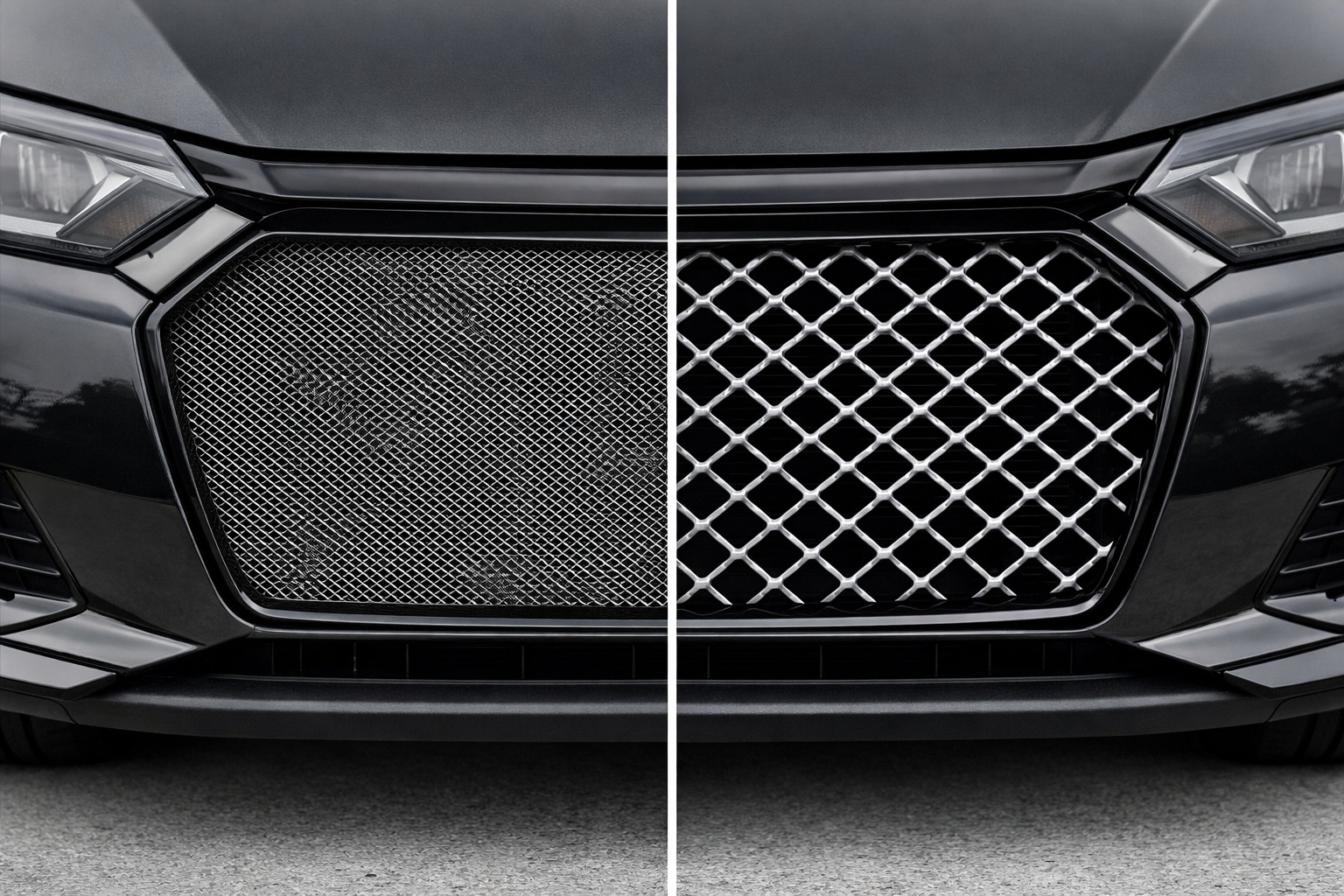
For most passenger cars in daily driving, a medium or closer-to-coarse aluminum mesh is usually a better choice than an ultra-fine one. It provides solid protection for the radiator and condenser from typical debris, while restricting airflow less and clogging less often with snow, slush, and dirt.
An ultra-fine cell is worth installing only when your priority is a barrier against small stones, insects, and seeds—and you’re ready to clean it more often. The choice depends not only on the opening size, but also on the open area, metal thickness, sheet rigidity, and the mounting method.
What the choice is really about
The main trade-off is simple: the denser the mesh, the better it catches small debris, but the higher the risk of unnecessary airflow restriction and faster clogging of the front end. The larger the cell, the easier the radiator pack breathes and the simpler the maintenance, but some small stones and debris will pass through.
It’s also important that visually “fine” mesh doesn’t always mean the worst airflow. In different aluminum options, open area can vary a lot—roughly from 31% to 73%. So you should look not only at cell size, but also at geometry, wire thickness, and the distance to the radiator.
What criteria to compare
Airflow. This is the baseline criterion. For a daily driver without cooling headroom, with an intercooler, a tight heat-exchanger stack, or active shutters, an overly dense insert is undesirable. A larger open area usually means less pressure drop, but hole shape and metal thickness also matter.
Protection. Fine mesh is better at stopping insects, small gravel, and plant debris. Coarse mesh saves you from larger stones and leaves, but doesn’t provide the same barrier for small stuff.
Installation and practicality. One sheet can be mounted without removing the bumper; another may require trimming, a rigid frame, or even disassembly of the front end. It also matters whether you’ll have access for washing—because fine mesh without service access quickly becomes annoying.
Noise and durability. Whistling is usually caused not by the idea of mesh itself, but by poor installation: cut edges, weak fastening, and panel vibration. For durability, rigidity is critical: thin fine mesh dents more easily during washing, while a thicker, stiffer sheet holds its shape longer.
Price. Cell size alone doesn’t give an honest answer about the budget. Compare the complete package: material, thickness, sheet format, fasteners, and labor. A cheap sheet that takes a long time to fit isn’t always a better deal than a ready-made solution.
Quick comparison of options (table)
| Option | Strengths | Weaknesses | Who it suits |
|---|---|---|---|
| Fine aluminum mesh | Better at stopping small stones, insects, and seeds; provides more maximum protection for heat exchangers | Builds up dirt and winter slush faster; requires more frequent cleaning; with poor installation it can restrict airflow more | For those who drive highways often, hit lots of insects, and want maximum protection, but are ready for regular maintenance |
| Medium mesh | The best balance of protection, airflow, rigidity, and ease of maintenance | Doesn’t catch very fine debris as well as fine mesh; doesn’t provide as open a flow as coarse mesh | Most passenger cars and crossovers for daily use |
| Coarse or very open mesh | Lets air through better; clogs less often; easier to wash; often more rigid | Weaker protection from small gravel and fine debris | Cars with sensitive cooling, hot operating conditions, winter slush, or high load |
DD Tuning expert comment: the most common mistake is choosing the finest mesh “just in case” and mounting it almost flush against the condenser. After the first winter it quickly collects dirt, salt, and snow, and it’s inconvenient to clean. For a daily driver without special requirements, it’s usually smarter to choose a medium cell and mounting that allows you to remove the insert for washing.
Detailed breakdown of each option
Fine
This is the choice for those who want a stronger barrier in front of the radiator. A typical fine woven mesh may have openings around 1.1–1.3 mm, so it actually catches what a coarse grille would let through. This option makes sense on highways, where there are lots of insects, small gravel, and dust.
The downside is that fine mesh is more sensitive to contamination. If the car is driven in winter slush, salt, and wet snow, the front end has to be cleaned more often. The second risk is poor installation: a thick or too tightly placed insert can unnecessarily block airflow, especially on cars with a tight radiator pack.
Medium
This format most often turns out to be the most sensible. For automotive expanded-mesh inserts, typical openings fall somewhere in the 5×10, 7×12, 8×16 mm range. They provide solid protection for heat exchangers from typical road debris, but don’t collect dirt as aggressively as a fine cell.
Medium mesh is also convenient because it’s usually more rigid and handles washing more calmly. If the car is used every day in the city, on the highway, in winter and summer without extremes, it’s the least conflict-prone option.
Coarse
Coarse or very open mesh is needed where the priority is airflow and ease of maintenance. It traps less dirt, ices up less often, and is easier to blow out or rinse. For cars that often operate in heat, under load, in the mountains, or have sensitive cooling, that’s a strong argument.
But you need to be honest about the limits of protection: such an insert takes the hit from large objects, while small gravel and fine debris partially pass through. So a coarse cell isn’t “better overall”—it’s better for a specific use case.
Which option is better for different scenarios
If the car is a typical city-and-highway vehicle, without regular towing, sporty loads, or overheating issues, medium mesh most often wins. It gives protection without a noticeable loss of practicality.
If the car constantly drives on gravel roads or you’ve already had condenser damage, then it makes sense to look toward a finer cell. But you should plan cleaning access in advance, especially for winter.
If the priority is cooling, easy maintenance, and minimal winter risks, a coarser mesh is safer. This is especially true for cars with an intercooler, active shutters, a tight front end, or not much airflow headroom.
Use scenario and what to choose (table)
| Scenario | Best choice | Why |
|---|---|---|
| Daily city and highway | Medium mesh | Provides a solid balance of protection, airflow, and washing convenience |
| Lots of insects, gravel, fine debris | Fine or medium-fine | Better protects the condenser and radiator from small damage |
| Winter use with slush and snow | Medium or coarse | Less chance the front end will quickly clog with icy slush |
| Heat, mountains, load, trailer | Coarse or very open | Lower airflow resistance and reduced risk of unnecessarily limiting cooling |
| Car with a dense heat-exchanger pack, intercooler, or active shutters | Medium with high open area | You need a compromise: protection without excessive airflow blockage |
Common mistakes when choosing
- Focusing only on cell size and ignoring open area and metal thickness.
- Placing dense mesh too close to the radiator or condenser.
- Choosing a fine cell for a winter daily driver without planning cleaning.
- Buying a sheet that’s too soft, which then dents from washing or vibrates at speed.
- Saving on mounting: if the panel moves, you get noise, misalignment, and a risk of rubbing through.
- Blocking sensor, camera, or active-shutter mechanism areas.
When a more expensive solution makes sense
A more expensive option is justified not when you simply want “something nicer,” but when precise fitment, a rigid frame, a neat look, and minimal installation risk matter. In such cases, it’s worth looking not only at aluminum mesh, but also at ready-made radiator grilles, or understanding in advance how to cover a car’s radiator grille without conflicting with sensors and OEM components.
This kind of solution is especially logical for cars with complex front-end geometry, an expensive heat-exchanger stack, active shutters, or when the owner doesn’t want to cut, drill, and spend time fitting a universal sheet. Here you’re paying not only for the material, but for a predictable result and fewer chances of buying the wrong thing.
From a customer’s experience: a crossover owner wanted maximum protection after a stone damaged the condenser and initially wanted the finest mesh. After discussing the driving conditions—highway, winter, wet mud—the choice was changed to a stiffer medium insert. In the end, protection remained sufficient, while cleaning the front end became much easier and there were no extra questions about cooling.
Conclusion
If you need a short answer, for most cars a medium or closer-to-coarse aluminum mesh is better. Fine mesh makes sense where the priority is maximum protection from small debris, but you pay for it with more frequent cleaning and greater sensitivity to poor installation. Ultimately, choose based on three things: cooling headroom, operating conditions, and service convenience. This material is based on real selection experience, practical work, and real usage scenarios—not on choosing “by photo” or by cell size alone.
How it works
- Assess the operating conditions First, determine where the vehicle is driven most often: the city, highways, gravel roads, winter slush, or hot weather under load. The usage pattern shows whether protection from small debris or unrestricted airflow is more important.
- Check the cooling reserve If the vehicle has a dense heat exchanger package, an intercooler, or active shutters, a very fine and dense mesh is not advisable. In such cases, it is better to choose a medium or more open cell size so as not to restrict airflow.
- Compare cell size with open area Do not rely only on the terms “fine” or “coarse.” Also look at the open area, metal thickness, and sheet rigidity: these parameters determine how well the mesh lets air through and how quickly it clogs up.
- Choose the option for your use case For everyday city driving and highways, a medium mesh is most often suitable as a balance between protection and maintenance. Fine mesh is needed if protection from stones, insects, and seeds matters more, while coarse mesh is best when cooling and easy cleaning are the priority.
- Plan for installation and access to cleaning Before installation, make sure the mesh can be secured properly without vibrations, misalignment, or cut edges. Also leave access for washing: without this, even a good fine mesh will quickly become inconvenient to use.
- Do not cover important components During installation, do not block the areas of sensors, cameras, or active shutter mechanisms. If the design is complex or a precise fit is required, it is better to consider a ready-made solution instead of a universal sheet.
Pros and cons
A medium or slightly coarser mesh provides a good balance between protection for the radiator and condenser and airflow, so it suits everyday driving without unnecessary compromises.
A coarser mesh is less likely to clog with snow, slush, and dirt, making it easier to wash and maintain in winter.
A finer mesh catches stones, insects, and seeds better, so it is useful where there is a risk of minor damage to heat exchangers.
The choice is not limited to the mesh size alone: open area, metal thickness, sheet rigidity, and mounting method also matter, helping you choose a more practical solution for a specific car.
For cars with sensitive cooling, an intercooler, or active grille shutters, a coarser or medium mesh with a high open area reduces the risk of excessive airflow blockage.
A very fine mesh collects dirt, salt, and wet snow faster, so it needs more frequent cleaning, especially in winter.
A dense insert can interfere with airflow unnecessarily if installed poorly or too close to the radiator or condenser.
A coarse mesh protects less effectively against small gravel and fine debris, so it does not fully solve the problem of minor damage.
Thin fine mesh is easier to bend during washing, and weak mounting can cause noise, misalignment, and vibration.