















































 Author: Radomskyi Maksym Vasyliovych
Introduction: two different approaches to the “ideal” sports sedan
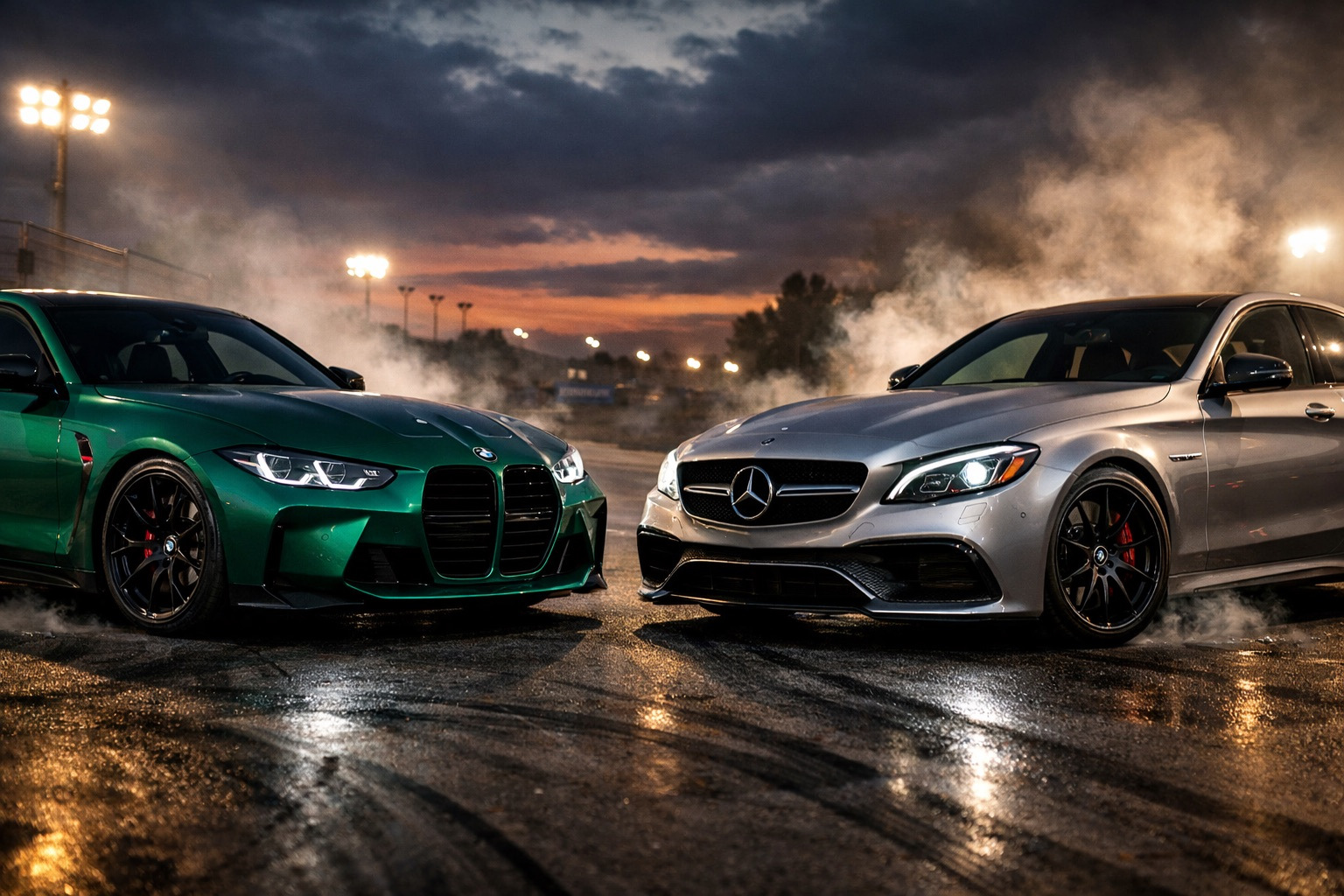
The new BMW M3 (G80, 2021+) and Mercedes-AMG C63 (W206, 2022+) are two legends of the class, but with completely different philosophies. BMW kept the classic format: a 3.0 inline-six with twin turbos, minimal unnecessary complexity, and a focus on handling. Mercedes, on the other hand, made a radical turn: a 2.0 turbo engine + a powerful electric motor and plug-in hybrid setup to achieve massive power and torque figures, as well as the ability to drive “on electricity” in the city. For a car enthusiast (and a tuning shop customer), this means different driving sensations, costs, and customization and tuning opportunities.
Quick numbers comparison: BMW M3 G80 vs Mercedes-AMG C63 W206
Comparing the current “new” models: BMW M3 G80 (2021+) and Mercedes-AMG C63 S E Performance W206 (2022+).
| Parameter | BMW M3 (G80) | Mercedes-AMG C63 (W206) |
|---|---|---|
| Powertrain | 3.0 R6 Twin-Turbo (petrol) | 2.0 R4 Turbo + electric motor (Plug-in Hybrid) |
| Power | up to ~510 hp (Competition) | up to ~680 hp (combined) |
| Torque | up to ~650 Nm | up to ~1020 Nm (combined) |
| Drive | RWD or AWD (xDrive) | AWD (4MATIC+) |
| Transmission | 6-MT (base versions) or 8-AT | 9-AT + 2-speed gearbox for electric motor |
| 0–100 km/h | ~3.5 s (Competition xDrive, claimed) | ~3.4 s (claimed) |
| Top speed | 250 km/h (limited) / up to ~290 km/h with package | 250 km/h (limited) / up to ~280+ km/h with package |
| Weight | approx. ~1750–1800 kg (depending on version) | approx. ~2100–2200 kg (due to hybrid system) |
| Consumption (realistic) | 10–14 l/100 km in mixed spirited driving | can be very low in city with charging, but 10–15+ l/100 km under spirited driving |
| Prices (approx.) | often cheaper with similar equipment | often more expensive due to “top” spec and hybrid tech |
Design and “presence effect”: who will prefer which
BMW M3 G80
The BMW M3 G80 is all about aggression. Wide fenders, muscular shoulders, four exhaust tips, and a signature front end that sparks debate but never leaves anyone indifferent. Visually, the M3 looks like a car ready for the track right from the start. It appeals to those who want an uncompromising image and aren’t afraid of attention.
Mercedes-AMG C63 W206
The new C63 looks more “expensive” and restrained overall, but with clear AMG accents: aggressive bumpers, wide stance, powerful brakes, and massive wheels. It’s for those who want a sporty character but with Mercedes’ premium, “business” style.
Engine and power delivery: classic vs technology
BMW M3: inline-six + elasticity
The 3.0 R6 Twin-Turbo in the M3 (especially in the Competition version) delivers controllable power: smooth torque, pulling strongly from low revs and maintaining pace at the top end. Its biggest strength is the mechanical feel, predictability, and “alive” throttle connection. For classic M-series fans, this is exactly why they love BMW: handling + an engine that begs to rev.
Mercedes-AMG C63: hybrid punch and instant response
The C63 W206 in S E Performance form is a different reality: the electric motor provides an instant “kick,” creating a very sharp launch feel, and the combined power/torque figures are near-supercar level. But the acceleration character is more complex: in different modes, the car blends ICE and electric power differently — some find it brilliantly high-tech, others less “natural” than the BMW.
Transmission and drivetrain: how power is delivered
M3 offers a choice: rear-wheel drive (for pure driving and drifting) or all-wheel xDrive (for stable launches and the quickest 0–100). In AWD form, the BMW puts power down very effectively and feels more confident in cold weather.
C63 is designed from the start for maximum traction — AWD and hybrid logic help it drive “confidently and fast” even when a typical RWD sports sedan would start to lose grip.
Acceleration and speed feel: similar numbers, different emotions
On paper, the 0–100 km/h difference is minimal: both are extremely quick (around 3.4–3.5 seconds in top specs). But the sensations differ:
- M3 — speed builds more linearly and predictably, with clear throttle control.
- C63 — impresses with its “electric punch” at launch and during roll-on acceleration when the electric motor adds torque instantly.
Handling and suspension: track focus vs GT comfort
BMW M3: driver at the center
The M3 feels built for precision. Sharp steering, quick reactions, and a very “sporty” chassis balance. In stiff suspension modes, it becomes extremely composed — ideal for good roads or track days. The trade-off: on rough asphalt it can be harsh, especially with large wheels and low-profile tires.
Mercedes-AMG C63: fast and comfortable, but heavier
The new C63 often feels like a very fast premium GT sedan. It’s more comfortable in daily driving, quieter inside, and more “Mercedes-like” in ride smoothness. But the hybrid weight can’t be fully hidden: in spirited corners, the BMW usually feels lighter and more playful at the limit.
Interior and technology: sporty cockpit vs “luxury + digitalization”
BMW M3
The M3 focuses on the driver: sporty seating position, clear ergonomics, M-mode settings, telemetry, and track-oriented features. The cabin is premium but feels like a “driving instrument.”
Mercedes-AMG C63
Mercedes wins with luxury: more “wow” from materials, lighting, digital screens, and assistants. In the city and on the highway, it feels like a very expensive, high-tech space that can also perform like a supercar.
Practicality: can you live with them daily?
Yes — both the M3 and C63 can be daily drivers. The difference is in the details:
- M3 is usually stiffer and more “emotionally loud,” perfect for those who want driving excitement 24/7.
- C63 is often more comfortable and quieter in normal modes, and can save fuel in the city (if you actually charge and use electric drive).
Costs, service, and risks: simpler vs more complex
BMW M3 generally looks more predictable long-term: a classic powertrain without a high-voltage battery or complex hybrid architecture. Yes, tire/brake costs under spirited driving will still be high — but the logic is simple and clear.
Mercedes-AMG C63 is more technologically complex. In theory, it can be more efficient in the city, but in real “active” use, consumption also becomes double-digit. Long-term risks are mostly tied not to the brand but to the hybrid system’s complexity and potential post-warranty component costs.
Price and trims: which offers better value
In many markets, the M3 offers strong “value”: you get a top driver’s sports sedan and can choose a version to match your style (RWD/MT or Competition/xDrive). The C63 is usually more expensive but comes very well equipped and with hybrid tech that some consider a must-have.
Tuning and customization: what interests your customers
BMW M3: a tuner’s paradise
The M3 G80 is one of the best tuning platforms in its class. The reasons are simple: model popularity, huge aftermarket, and an engine that responds well to Stage 1/2 upgrades. The most popular tuning directions:
- Stage/remap: power and torque increase.
- Intake/exhaust: faster response + richer sound.
- Suspension: springs/coilovers, ride height, stiffness, camber adjustments.
- Brakes: upgraded pads, braided lines, sometimes carbon-ceramic.
- Carbon/aero: splitters, diffusers, spoilers, trims, mirrors.
- Wheels/tires: wider setups for grip and looks.
Mercedes-AMG C63: next-gen tuning
Tuning for the C63 W206 will also be popular but different in focus. Some owners will want to:
- Exterior style: aero parts, carbon, diffusers, spoilers, black packages, different wheels.
- Improve sound: exhaust systems (since “sound” is a common complaint about the 4-cylinder format).
- Suspension and stance: modules/settings adapted to hybrid weight, proper stance.
- Performance: over time, more software and hybrid logic solutions will appear, but this is a “careful” area due to system complexity.
Feedback and real-world logic
BMW M3 is most often praised for handling, “pure” driver feel, and honest sporty character. It’s a car you want to drive, not just go fast in.
Mercedes-AMG C63 is praised for technology, comfort, and impressive torque/power figures. But some AMG fans miss the emotional V8 — it’s a matter of taste: some value efficiency, others “soul and sound.”
Conclusion: which to choose
Choose BMW M3 (G80) if:
- you want maximum driver engagement and steering precision;
- you value the classic “engine + chassis” logic without extra complexity;
- you plan to tune power/chassis and want a huge aftermarket choice.
Choose Mercedes-AMG C63 (W206) if:
- you want the latest technology and hybrid “boost”;
- you want a fast, comfortable, and very premium daily sedan;
- you’re ready for more complex tech and potentially higher maintenance costs for innovation’s sake.
Both cars are top-tier — they just deliver different emotions. The BMW M3 is about control, balance, and mechanical driving feel. The Mercedes-AMG C63 is about technological breakthrough, maximum numbers, and premium comfort. And for tuning and customization, both are very “alive” platforms: the M3 already has tons of solutions, while the C63 will become the main battlefield for next-gen tuning (sound, style, hybrid weight setup, and software).