















































 Author: Radomskyi Maksym Vasyliovych
On October 28, 2026, Toyota officially announced that it is developing a new generation of hybrid system: a family of 1.5-liter four-cylinder gasoline engines (naturally aspirated and turbo) with more compact electric motors and power electronics. The company’s goal is more than 15% better fuel efficiency. The “85 mpg” figure (≈3.3 l/100 km) was not stated by Toyota but by the UK’s Auto Express: it is their calculation, not an official fuel-consumption figure.
Contents
- What Toyota officially announced
- Where the 3.3 l/100 km came from
- How the new engine differs from the current ones
- When and on which models it will appear
- What this means for owners of hybrid Toyota vehicles
What Toyota officially announced
The Toyota Motor Europe press release dated 28.10.2026 is titled “Toyota develops next-generation hybrid for future multi-pathway platforms.” The key points are:
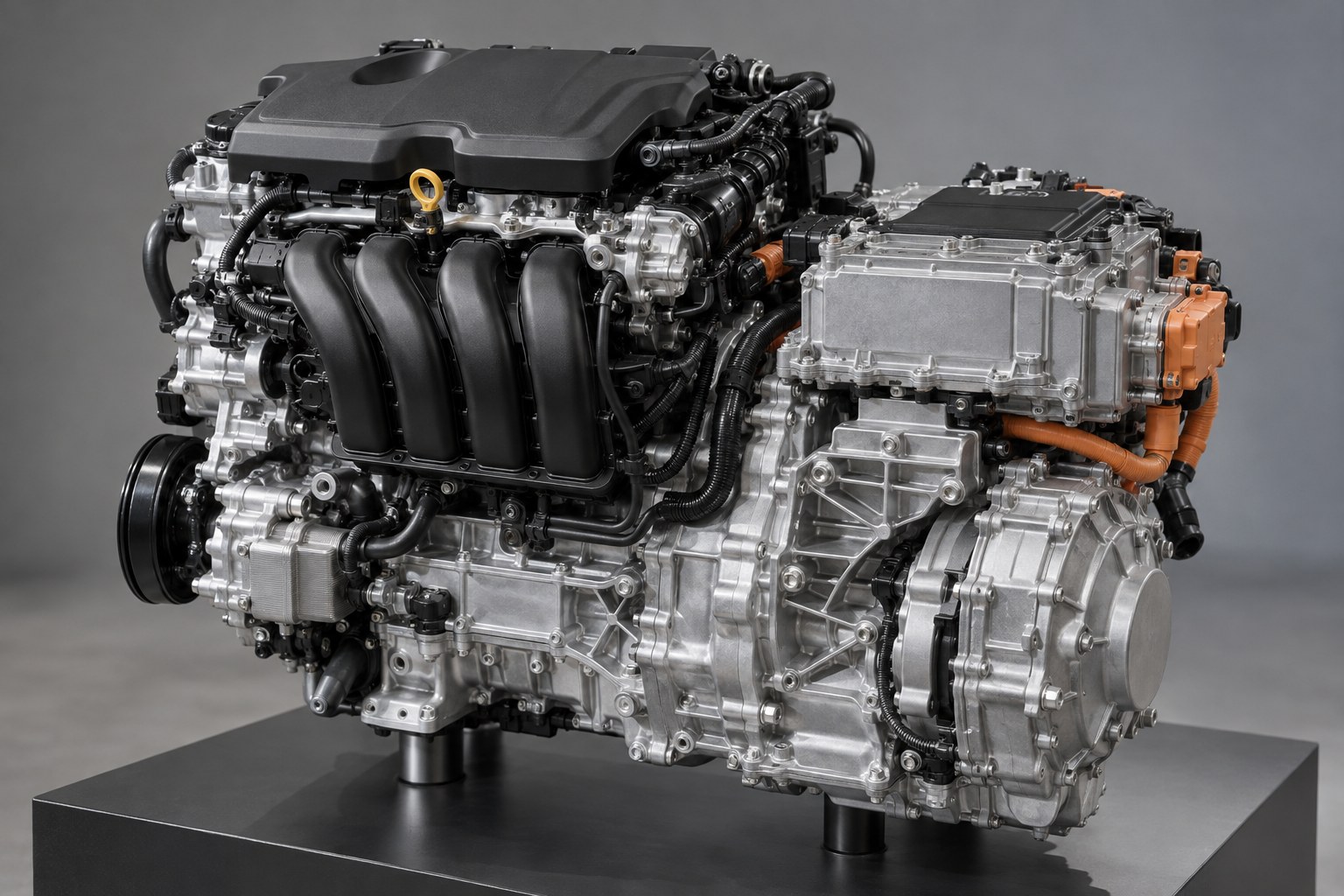
- A new engine family — 1.5-liter four-cylinder units in naturally aspirated and turbocharged versions. They were designed for electrification from the outset, rather than retrofitting an existing engine.
- A new hybrid component — lighter and more compact electric motors, power control units, and inverters. The engine, hybrid system, and power electronics were developed together as a single unit.
- Efficiency target — more than 15%. Through reduced mechanical friction, better thermal management, lower electrical losses, and reduced aerodynamic drag.
- One platform for three drive types. The compact hybrid fits on the same platform as battery-electric vehicles (BEV), plug-in hybrids (PHEV), and conventional hybrids (HEV) without compromising BEV performance. The low engine allows the hood line to be lowered.
- Fuels of the future. The system is being prepared to run on renewable and carbon-neutral fuels, and Toyota plans to sell the engine and hybrid technologies more actively to other manufacturers.
What the press release does not include: power, torque, specific fuel-consumption numbers, a production start date, or a list of models. Toyota also does not specify what “more than 15%” is being measured against, and the Australian outlet The Beep explicitly calls this figure a development target rather than a test result.
Where the 3.3 l/100 km came from
The Auto Express headline says it “could deliver more than 85 mpg.” The editors took the best figure from current Toyota hybrids — up to 74 miles per gallon — and added 15%. That comes out to about 85 mpg.
Important: these are UK (imperial) gallons, 4.546 l, not US gallons (3.785 l). The conversion looks like this:
| Figure | Miles per imperial gallon | Liters per 100 km |
|---|---|---|
| Current Toyota hybrids (per Auto Express) | 74 mpg | ≈3.8 l |
| Estimate for the new hybrid (+15%) | ≈85 mpg | ≈3.3 l |
There is a nuance that often gets lost: “15% more kilometers per liter” is not the same as “15% fewer liters.” When converted to l/100 km, consumption drops by about 13%: from 3.8 to 3.3 l. Auto Express does not specify the test cycle (WLTP or otherwise), so real-world winter city consumption will be different.
CarExpert made a similar calculation using Australian official figures: Yaris 3.5 l/100 km → about 3.0 l, Corolla Hybrid 4.0 l → about 3.4 l. These are also the publication’s estimates, not Toyota’s.
How the new engine differs from the current ones
According to The Beep and CarExpert, the naturally aspirated version is intended to cover the range currently served by two Toyota hybrid engines: the 1.8-liter four-cylinder (Corolla, first-generation C-HR) and the 1.5-liter three-cylinder (Yaris, Yaris Cross).
Toyota first showed the engines back on May 28, 2024 in Tokyo — at a joint event with Mazda and Subaru. At the time, the company said the new naturally aspirated 1.5 is about 10% smaller in displacement and height than current 1.5-liter engines, and alongside it they showed a 1.5 turbo and a 2.0 turbo that is meant to replace the 2.4-liter turbo engine in larger models.
The difference from the current approach is that the engine, electric motors, and inverters were designed simultaneously. Previously, a Toyota hybrid was built around an already finished gasoline engine. Now it is built around a platform where a battery-electric vehicle, a plug-in hybrid, and a conventional hybrid can sit side by side.
When and on which models it will appear
Officially — unknown. Toyota has named neither the first model nor the year production will start.
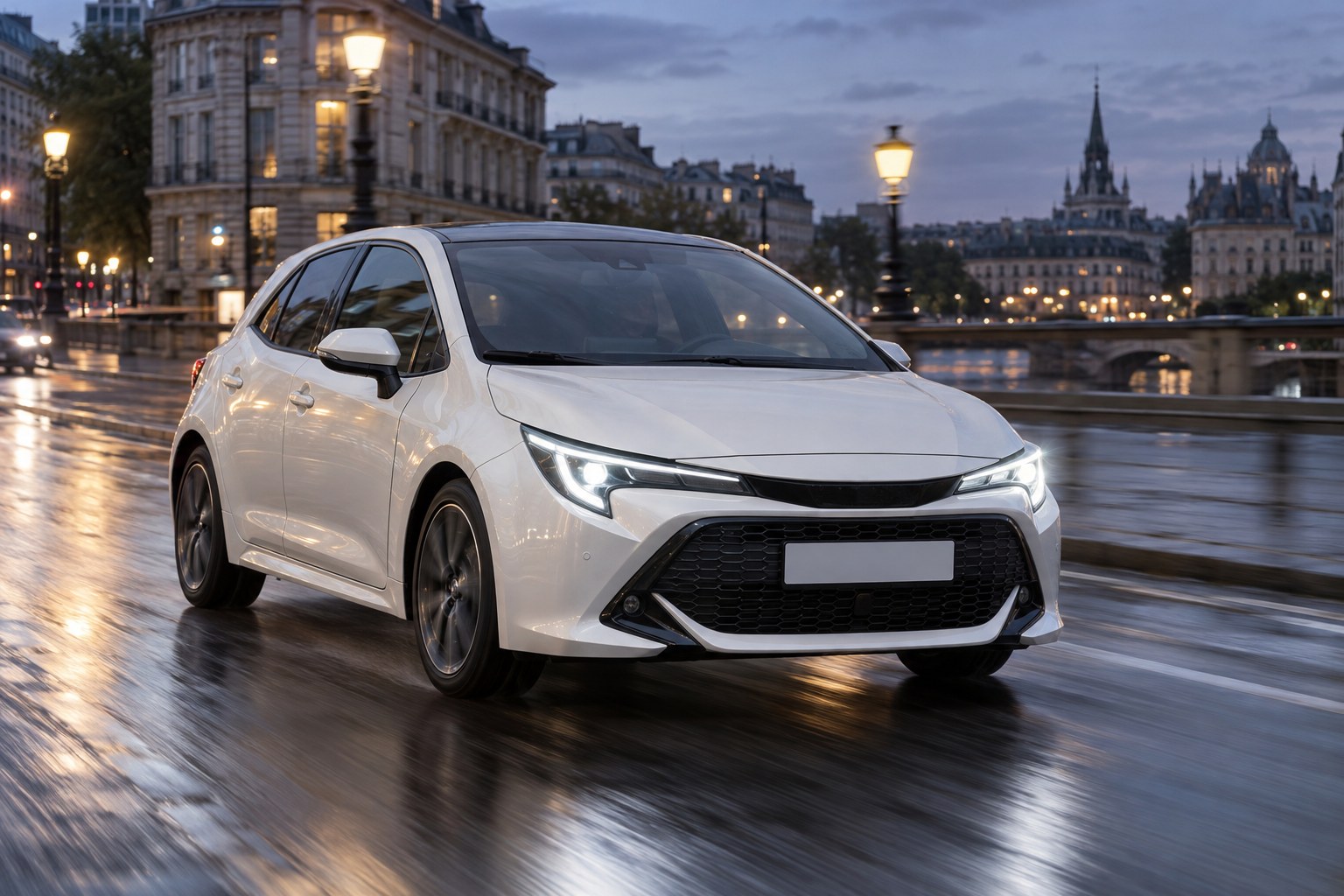
Auto Express expects the engine to become the basis for the next-generation Corolla which, according to its information, will arrive “sometime in 2028” with a hybrid, a plug-in hybrid, and a fully electric version. How the design might change with a lower hood line is illustrated by the publication using a Corolla concept from the 2025 Tokyo Motor Show. CarExpert also considers Corolla the most likely first model but calls it an assumption.
Logically, the engine would then go into Yaris, Yaris Cross, and C-HR — it is replacing their engines specifically. But that is an inference from technical data, not a statement from Toyota.
What this means for owners of hybrid Toyota vehicles
Current hybrids are not going anywhere: the 1.8 and the 1.5 three-cylinder remain on Corolla, C-HR, Yaris, and Yaris Cross until a replacement arrives (the RAV4 uses a 2.5-liter hybrid; this announcement does not concern it). The new engine is the next generation, and before it reaches real cars in showrooms, if Auto Express is to be believed, it is at least two years away.
For those who are already driving a hybrid Toyota today, it is more useful to think about what actually affects consumption right now: tire pressure, aerodynamics (roof racks and roof boxes add drag), and the weight of unnecessary items in the trunk. Accessories for specific models are in the Toyota Corolla 2019+, Toyota C-HR 2016–2023, and Toyota RAV4 2025+ sections, and the brand’s full range is in the Toyota tuning catalog. Other news about new models is in the auto news section.
We ship via Nova Poshta across all of Ukraine.