
















































 Author: Radomskyi Maksym Vasyliovych
The window won’t go down in winter because water has frozen between the glass and the door seal: moisture after a car wash, rain, or a thaw gets under the outer window molding, turns into ice overnight, and “glues” the glass to the rubber. If at that moment you press the power-window button or try to pry the ice out with a scraper under the chrome trim, most often it’s not the glass that suffers but the molding, the seal, and the window regulator motor. Below is why this happens, how to free the glass without damage, and how to prepare chrome moldings for frost.
Contents
- What an outer window molding is and where it sits
- Why the glass freezes specifically near the molding
- Why you must not press the button when the glass is frozen
- How to scrape ice off without ripping off the molding
- How to free a frozen window
- How to prepare chrome moldings for winter
- Stainless steel or chrome plastic: which handles frost better
What an outer window molding is and where it sits
An outer window molding is a narrow strip along the lower edge of the side window, on the line where the glass goes into the door. On many cars it is a factory rubber-plastic part with a soft inner “brush”: it presses against the glass and wipes off water and dirt when the window goes down. Stainless-steel chrome moldings installed for tuning are usually stuck on top of the factory strip using double-sided automotive tape. More about the types is in the article what moldings on a car are.
So, two joints appear near the glass: between the glass and the seal, and between the factory strip and the trim cover. Both matter in winter.
Why the glass freezes specifically near the molding
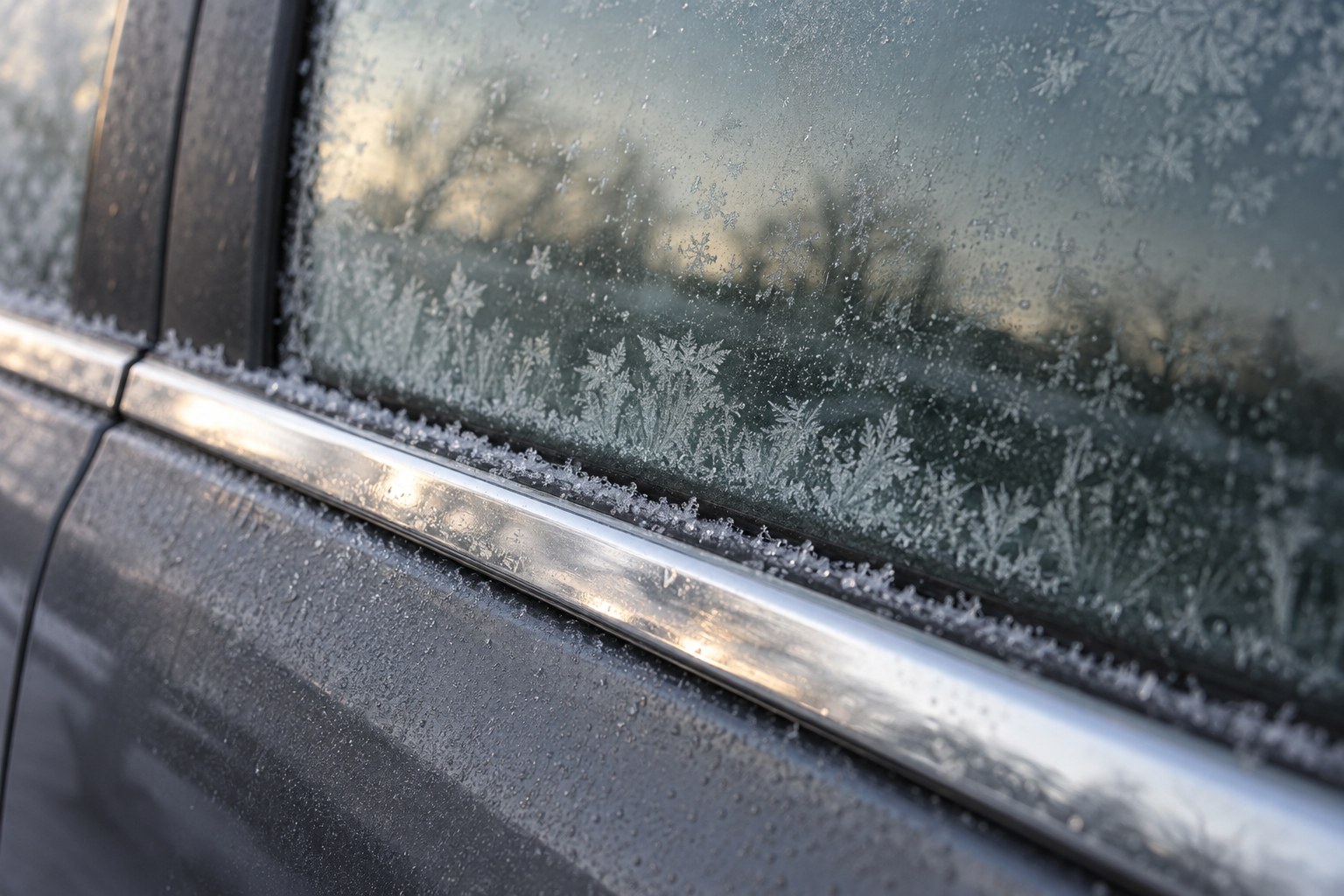
The molding’s seal fits tightly against the glass, and a narrow gap forms above it where water lingers. After a wash, wet snow, or a thaw, it runs down the glass and remains in that gap. When the temperature drops below zero at night, the water turns into ice and bonds the glass, the rubber, and the lower edge of the trim into one solid piece. Most often this happens on days with temperatures crossing zero: it melts during the day and freezes at night.
The second reason is an old or dirty seal. Sand and de-icing chemicals make the rubber rougher; it wipes water off the glass worse, and the porous surface also holds ice more firmly.
Why you must not press the button when the glass is frozen
The window regulator motor pulls the glass down with considerable force, while the ice holds it at the top. Possible consequences:
- the molding’s seal “brush” tears or gets pulled out—after that the glass squeaks and water leaks into the door;
- the glass drags the trim cover with it: the tape hardens in the cold and holds worse, so the chrome molding may peel off at one edge;
- the motor overheats or the cable and sliders of the window regulator break, especially on older cars;
- the glass comes out of the guides and tilts inside the door.
If you pressed the button and the glass did not move, release it immediately. Repeated attempts only increase the risk of damage.
How to scrape ice off without ripping off the molding
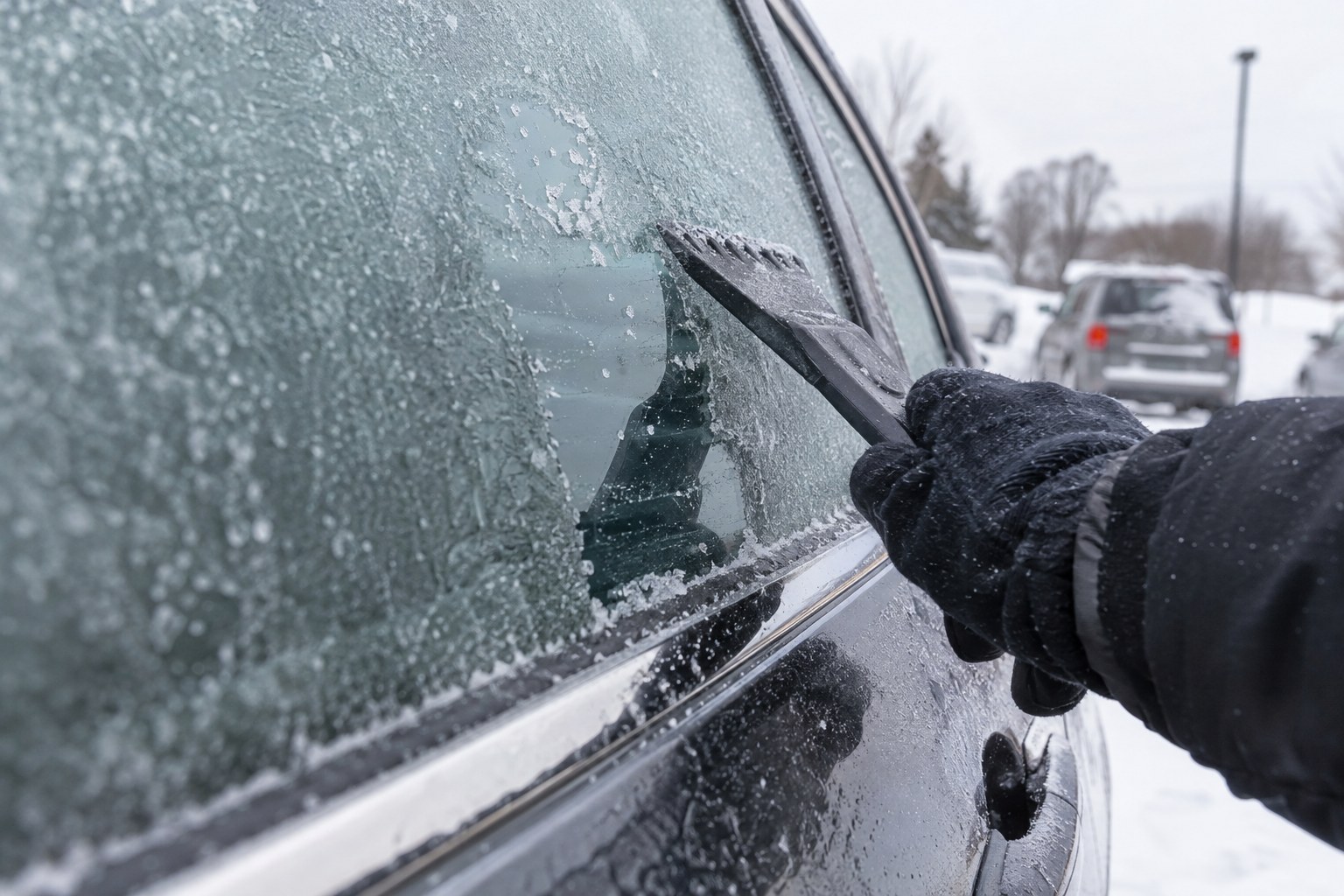
Use a scraper to remove ice from the surface of the glass, not from the molding. The main rule: move the scraper from the molding upward or along it, but never from below under the edge of the trim. The edge of a plastic scraper slipped under a chrome strip works like a lever: it lifts the trim, tears the tape layer, and leaves scratches on the stainless steel.
- do not pry ice out of the gap between the glass and the molding—warmth should melt it there;
- do not use metal putty knives, blades, or credit cards;
- do not knock the ice off by hitting the molding or the door;
- do not pour hot water on the glass: a sudden temperature change can crack the glass, and the water will freeze again in the gap.
How to free a frozen window
A reliable method is heat from the inside. Start the engine, turn on the cabin heater with airflow to the side windows, and let the glass warm up for 10–15 minutes. The ice in the gap melts from the glass, and the window moves freely again. You can speed things up with an aerosol glass de-icer: spray it along the joint between the glass and the molding and wait a few minutes. A step-by-step instruction is below the article.
If the glass has already thawed, lower and raise it fully a few times: the seal will wipe away remaining water. Before parking overnight in freezing temperatures, keep the windows fully closed.
How to prepare chrome moldings for winter
In autumn, three steps are enough:
- Wash the joint between the glass and the molding to remove sand and de-icing chemicals, then wipe it dry.
- Treat the seal with a silicone-based rubber care product: it repels water, and ice sticks to the rubber less. Apply it to the rubber, not to the glass.
- Inspect the edges of the chrome trim cover. If an edge is lifting, reattach it in a warm garage at temperatures from +15 °C: in the cold the tape will not bond. How to remove old adhesive without damaging the paint is in the article how to remove tape and glue residue from the body.
In winter, chrome is also damaged by road salt. About washing and protection, see the article does salt damage chrome trim covers, and about a similar problem with handles, the piece a handle with a chrome cover has frozen.
Stainless steel or chrome plastic: which handles frost better
A stainless-steel trim cover does not become brittle in freezing temperatures and does not crack from a scrape with a scraper, and its surface does not peel the way electroplated chrome on plastic does. More important than the material is the precision of the fit: the tighter the strip sits on the factory molding, the less moisture gets under its edge. Moldings made from Italian stainless steel by the Turkish manufacturer OmsaLine have a more precise fit; Carmos models are made from Turkish steel. You can select strips for your model in the door trim covers section, and all chrome parts are collected in the chrome trim covers category.
We deliver via Nova Poshta across all of Ukraine.
How to Free a Frozen Side Window Without Damaging the Molding
- Do not press the window switch If the window doesn’t move the first time, release the button. Repeated attempts may tear the seal, peel off the trim, or damage the window regulator.
- Warm up the cabin Start the engine and turn on the heater with air directed to the side windows. In 10–15 minutes, the ice in the gap between the glass and the seal will melt from the heat of the glass.
- Treat the seam with de-icer To speed it up, spray glass de-icer along the seam between the glass and the molding and wait a few minutes. Do not pour hot water: the glass may crack.
- Remove ice from the glass correctly Move the scraper along the glass from the molding upward. Do not slide it under the edge of the chrome trim, and do not pry ice in the gap.
- Check the window movement Once the glass has thawed, lower and raise it fully several times so the seal wipes off the water. If the edge of the trim has come loose, reattach it in a warm place.